

The Theater of Shadow and Lace: Crafting a Classic Noir Aesthetic
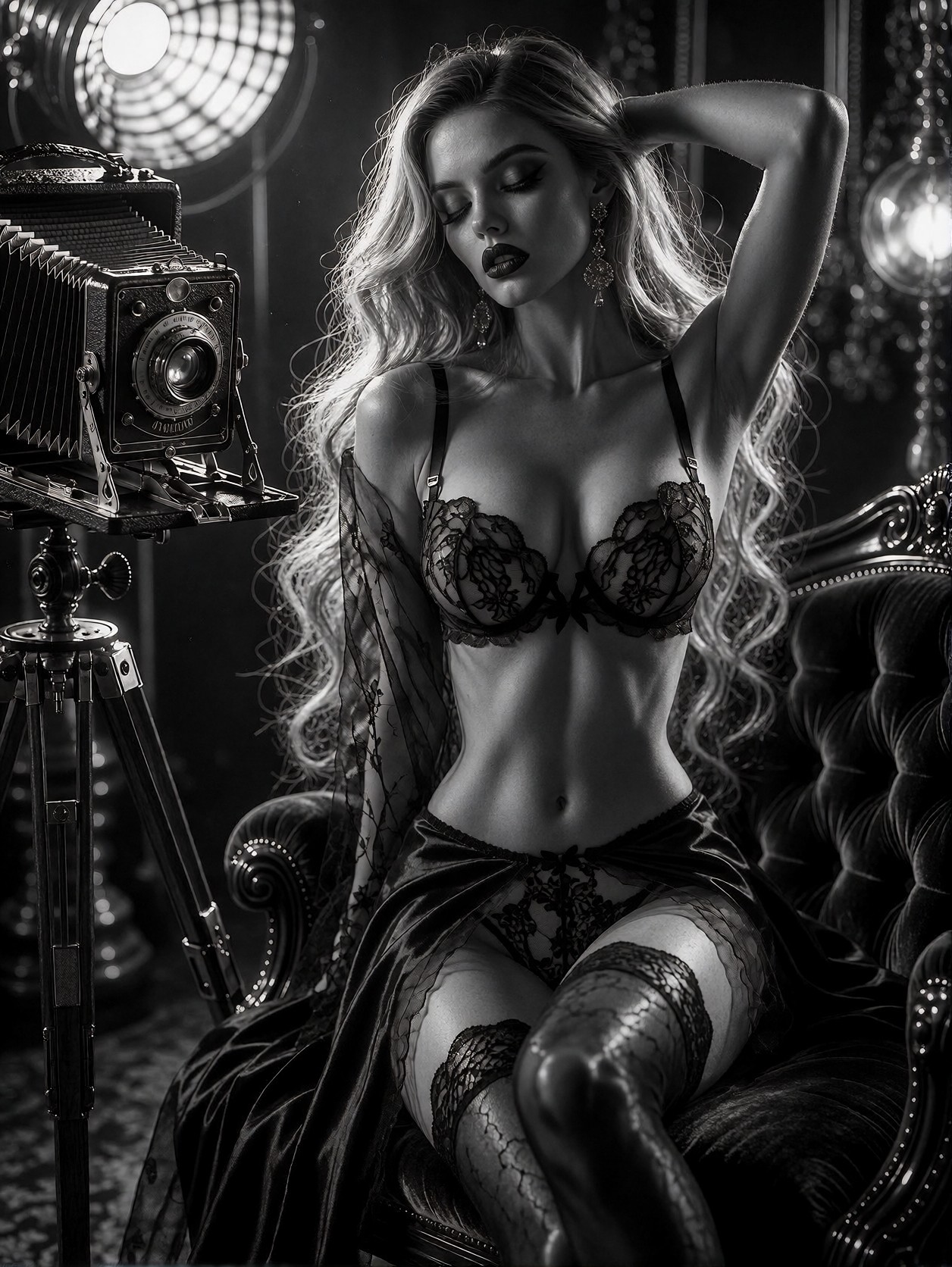
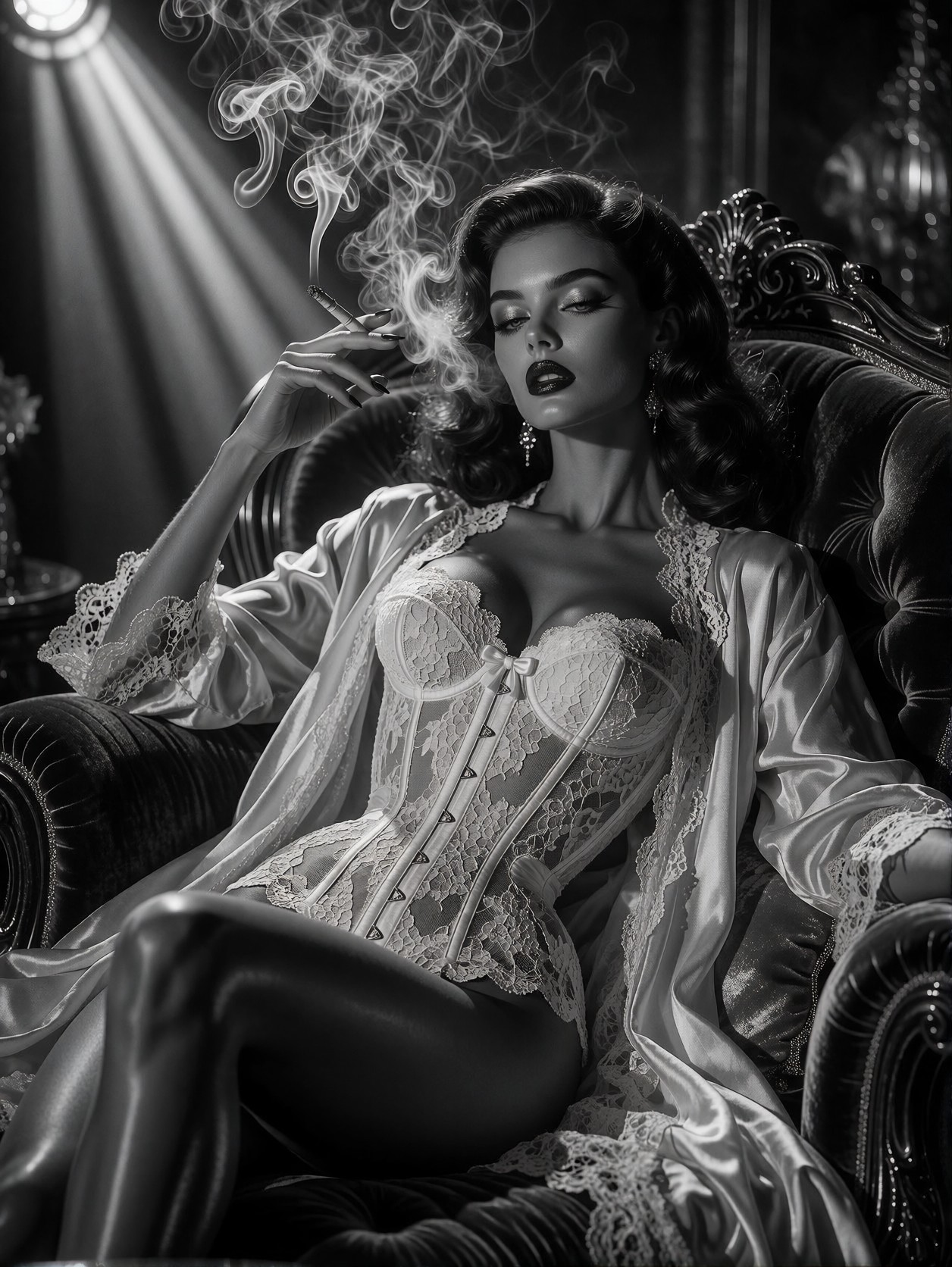
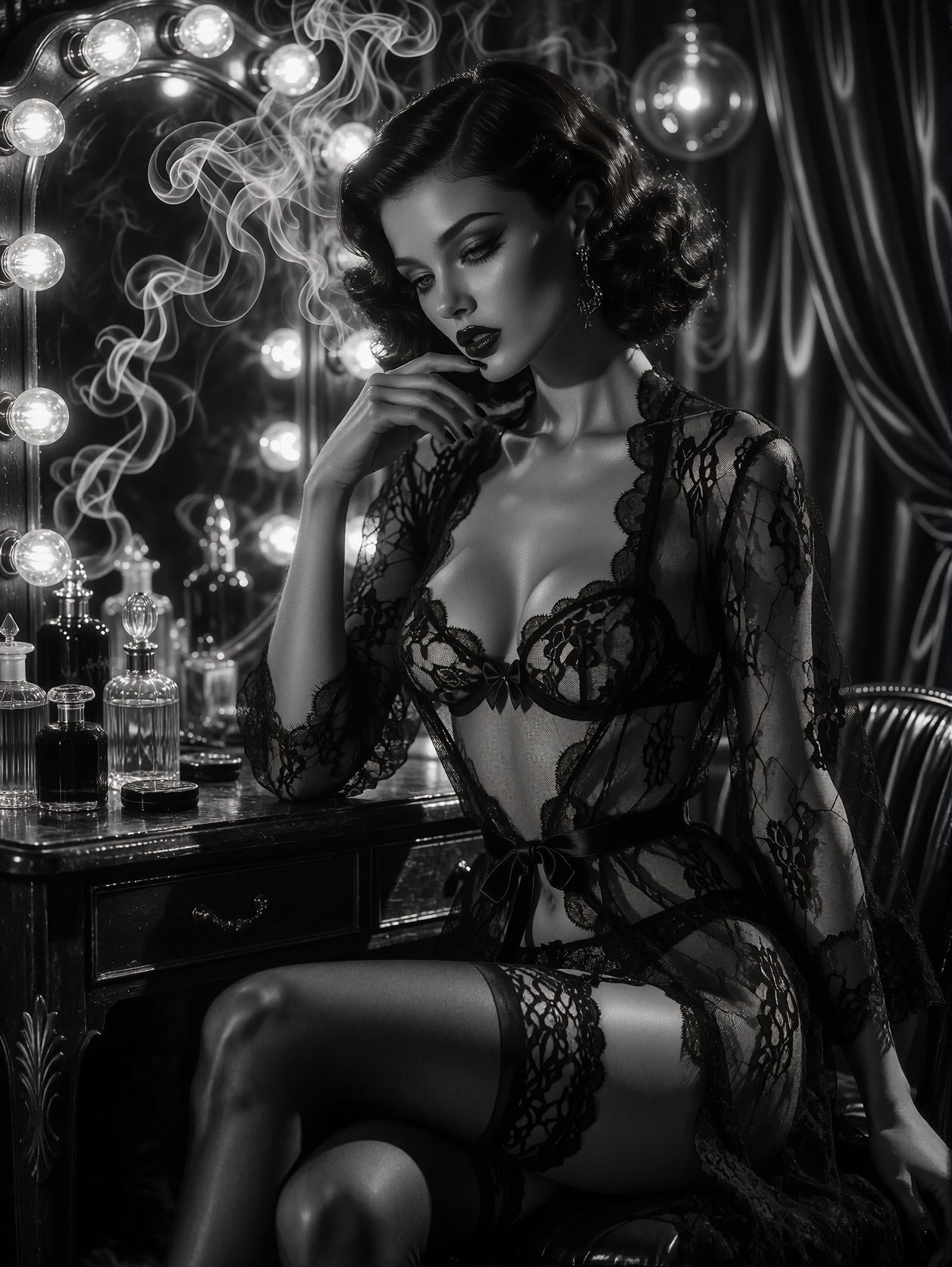
The delicate interplay between a glowing bulb and a curtain of deep shadow is the heart of this prompt. We are aiming for the dramatic, high-contrast world of 1930s cinema, where light isn't just illumination; it's a character defining the mystery of the scene. By setting a mysterious beauty at a vanity mirror backstage in a jazz club, we give Proxima Aurelia 2 rich visual storytelling material, allowing it to build a scene that feels lived-in and soulful.
The key to this visual depth lies in the textural contrast: the soft, fragile lace of the robe against the hard, reflective surface of the vanity, and the swirling smoke against the static satin curtains. The warm glowing bulb highlights prevent the image from becoming flat black and white, ensuring the composition feels intimate and alive. This is the perfect AI art prompt for anyone wanting to capture the ultimate moody photorealistic composition.
Perfect for Cinematic Editor Projects and Mood Boards
This specific image is ideal for projects that require a heavy dose of atmosphere and classic elegance. Think vintage film posters, high-end perfume advertising, sophisticated digital art editorials, or the cover art for a pulp mystery novel. If you are looking for a moody, richly textured composition with a focus on character and setting, this prompt delivers that 1930s glamour.
Since the composition is focused on a seated portrait, a square or 4:5 portrait aspect ratio will generally work best to maintain the intimacy of the vanity setting. Avoid extreme wide shots, as they dilute the dramatic focus on the subject.
Proxima Aurelia 2: Mastering Composition and Light
Proxima Aurelia is designed for exceptional aesthetics, meaning it will naturally lean into dramatic framing and high-quality textures. Because your prompt is highly specific (1930s, lace, vanity, B&W), you have excellent control over the output.
- Guidance Scale: 6.0–7.5 — Use a higher guidance scale to ensure the model doesn't soften the dramatic shadows and keeps the "Noir style" rigid, rather than letting it drift into a generic moody photo.
- Steps: 30 — For a model focused on high visual storytelling, more steps are required to resolve fine details like the lace weave, the smoke particles, and the individual threads of the satin curtains.
- Resolution: 1024x1024 or 1080x1600 — 1:1 or 3:4 ratios work best for this portrait composition.
Navigating LoRA Conflicts: Glamour vs. Gilded Opulence
You are combining two very distinct styles: Dark Glamour 80s (modern, shimmering, slightly pastel) and GPT style (opulent, gilded, celestial). Both are at 55%, which means they are actively competing with each other and the core B&W Noir theme. To achieve the desired "rich black and white photography" look, you must deliberately de-emphasize the color/glamour LoRAs.
The safest way to keep the Noir integrity is to drop both LoRAs below 30. If you want the Opulence of GPT style but still want the classic Noir mood, lower Dark Glamour 80s to 10 and keep GPT style at 40.
Five Creative Directions for Experimental Prompts
Five Targeted Variations for This Prompt
- Shift the era's color palette: Change "rich black and white photography" to "warm sepia tone, faded vintage photograph" — this retains the mood but shifts the visual context to the 1920s, giving it a more historical, fragile feel.
- Change the setting to Art Deco:** Replace "1930s jazz club" with "glamorous 1920s Art Deco penthouse bar, backlit by neon tubes" — this swaps the intimate club setting for a grand, geometric, and highly stylized environment.
- Change the subject's role:** Replace "mysterious beauty" with "femme fatale, holding a loaded cigarette, expression defiant" — this elevates the character from a passive beauty to an active, dangerous archetype.
- Introduce environmental action:** Replace "sitting at a vanity mirror" with "leaning against a velvet curtain, looking over her shoulder at the camera" — this breaks the static, posed nature of the portrait and introduces a dynamic, cinematic tension.
- Adjust the lighting source:** Replace "warm glowing bulb highlights" with "harsh, single overhead spotlight, creating severe chiaroscuro" — this dramatically increases the contrast and leans the image closer to true, unforgiving film noir.
Two Prompts Ready to Generate
These prompts apply two of the variations above, showing how a subtle shift in setting or lighting can radically alter the final cinematic feel of the image.
Variation: Art Deco Penthouse Setting — shifts the mood from smoky jazz intimacy to a grand, geometric, and luxurious 1920s atmosphere.
Noir style, a glamorous femme fatale in a delicate black lace robe, sitting in a 1920s Art Deco penthouse, surrounded by gold geometric patterns and neon tubes, rich sepia tone, high contrast photography, cinematic composition, highly detailed textures, dramatic shadows.
Variation: Harsh Spotlight — emphasizes raw, severe drama by replacing soft bulb warmth with extreme, unforgiving high contrast lighting.
Noir style, mysterious beauty in a black lace robe, harsh single overhead spotlight creating severe chiaroscuro shadows, sitting at a vanity mirror backstage, smoke floating, retro perfume bottles, highly detailed photorealistic composition, deep dramatic shadows, rich black and white photography.
More Noir and Vintage Character Studies
If you enjoy the high-contrast, dramatic storytelling of this prompt, explore these related prompts which push the themes of mystery, shadow, and vintage aesthetic in different scenarios: