When the Weatherman Becomes Static: Anatomy of an Analog Horror Frame
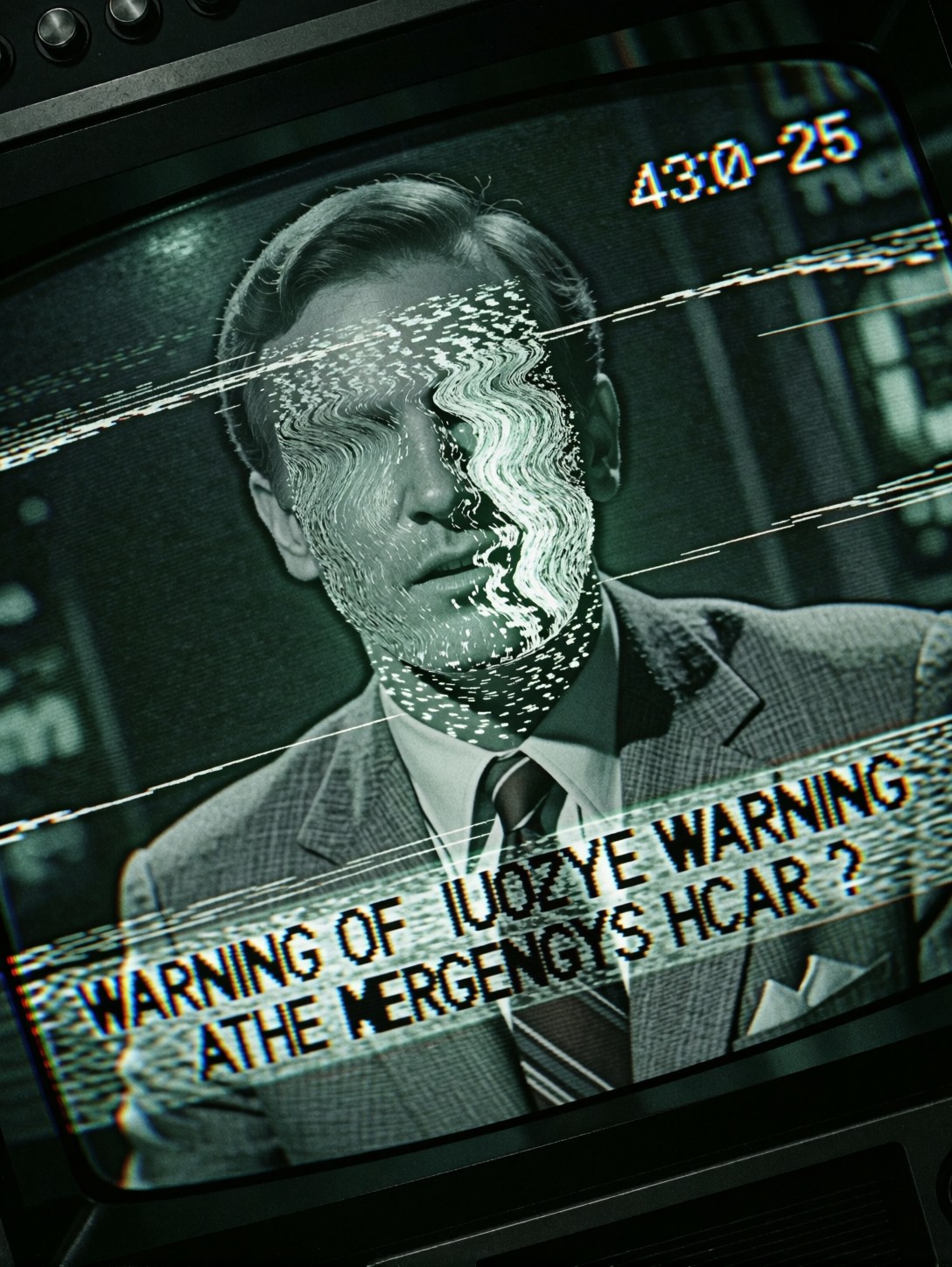
The most unsettling detail here isn't the glitch itself — it's what survives it. A crisp suit collar and tie, untouched, sitting directly below a face that has dissolved into churning white static. That contrast between formal broadcast decorum and total signal corruption is what makes this image read as true analog horror rather than generic distortion art.
Proxima Aurelia 2 handles the layered degradation beautifully: the green-phosphor tint unifies the palette, tracking lines and torn scanlines ripple through the frame, and the diagonal scrolling warning text lands in that pixelated sans-serif that screams 1980s emergency broadcast. Chromatic bleed along the edges and a flickering timestamp finish the illusion — you're not looking at a generated image, you're looking at a tape that should have been erased.
Who Should Use It — Thumbnails, Trailers, and ARG Assets
Found-footage horror creators, YouTube analog horror series (think local broadcast creepypasta), and ARG designers get the most mileage here. The 16:9 broadcast framing makes it ideal for video thumbnails, episode title cards, and in-fiction "leaked footage" stills.
Stick to landscape 16:9 — 1664×928 or higher. The lower-third text and corner timestamp both depend on the widescreen TV frame; portrait crops break the broadcast illusion instantly. One caveat: fine text can wobble between generations, so generate a few takes and pick the cleanest lettering.
Settings for Proxima Aurelia 2 — Noise With Intent
Aurelia 2 rewards simple prompts with rich composition, and this prompt is already densely specified — so keep guidance moderate and let the model interpret the degradation rather than fighting it.
- CFG / Guidance:
3.0–3.5— high values over-sharpen and kill the washed-out analog softness - Steps: 12 for quick composition previews, 30 for maximum static texture and clean text rendering
- Resolution:
1664×928(16:9 broadcast) — the native widescreen frame this composition expects
Resist the urge to raise CFG to "fix" the noise — the heavy grain and chromatic bleed are the point. If the output looks too clean, add "heavy VHS tape damage, dropout streaks" instead of touching settings.
Five Ways to Corrupt the Broadcast Differently
5 Targeted Variations for This Emergency Broadcast Prompt
- Swap the corrupted subject: Replace "weatherman's face" with "news anchor's hands fused into the desk" — the horror moves from identity loss to body horror while the suit-and-tie framing stays intact
- Change the tint: Swap "green-phosphor" for "sickly amber monochrome" — instantly reads as a 1970s archive tape instead of 1980s security footage, warmer but somehow more funereal
- Push the text: Change "bold warning text" to "emergency alert crawl reading DO NOT LOOK AT THE SCREEN" — legible in-fiction text turns atmosphere into narrative, ideal for ARG hooks
- Reveal the studio: Replace "barely visible behind the glitch" with "empty studio chairs overturned, one ceiling light swinging" — the background becomes a second horror layer for viewers who zoom in
- Go vertical for social: Add "cropped security monitor view, 4:5 frame, CRT bezel visible" — reframes the broadcast as something being watched on another screen, perfect for Instagram and TikTok posts
Two Prompts Ready to Generate
Both examples below apply variations from the list, tuned for Aurelia 2 at 16:9 with guidance around 3.5.
Variation: legible in-fiction alert text — the diagonal warning becomes a narrative hook, turning atmosphere into story
Analog Horror, grainy VHS still frame of a late-night emergency broadcast, green-phosphor tint, a news anchor's face dissolved into churning white static, suit and tie still visible below the corrupted signal, bold diagonal text reading DO NOT LOOK AT THE SCREEN in pixelated sans-serif across the lower third, tracking lines, torn scanline distortion, chromatic bleed at screen edges, flickering timestamp, dark empty studio behind the glitch, oppressive eerie mood, washed-out greens and grays, heavy analog noise, 16:9
Variation: amber archive tape reframe — 1970s monochrome warmth replaces green phosphor, with an active studio background layer
Analog Horror, degraded 1970s archive broadcast tape still, sickly amber monochrome tint, weatherman's face smeared into a block of churning white static, collar and tie intact below the corruption, torn scanline distortion and tracking lines rippling through the frame, timestamp flickering in the corner, overturned studio chairs and one swinging ceiling light barely visible behind the glitch, chromatic bleed, heavy tape damage and dropout streaks, oppressive eerie mood, highly detailed
More Analog Horror Frames to Explore
These prompts share the same found-footage dread — abandoned spaces, surveillance angles, and figures that shouldn't be on camera: