The Quiet Elegance of Time: Capturing Nostalgia in a Clockmaker's Workshop
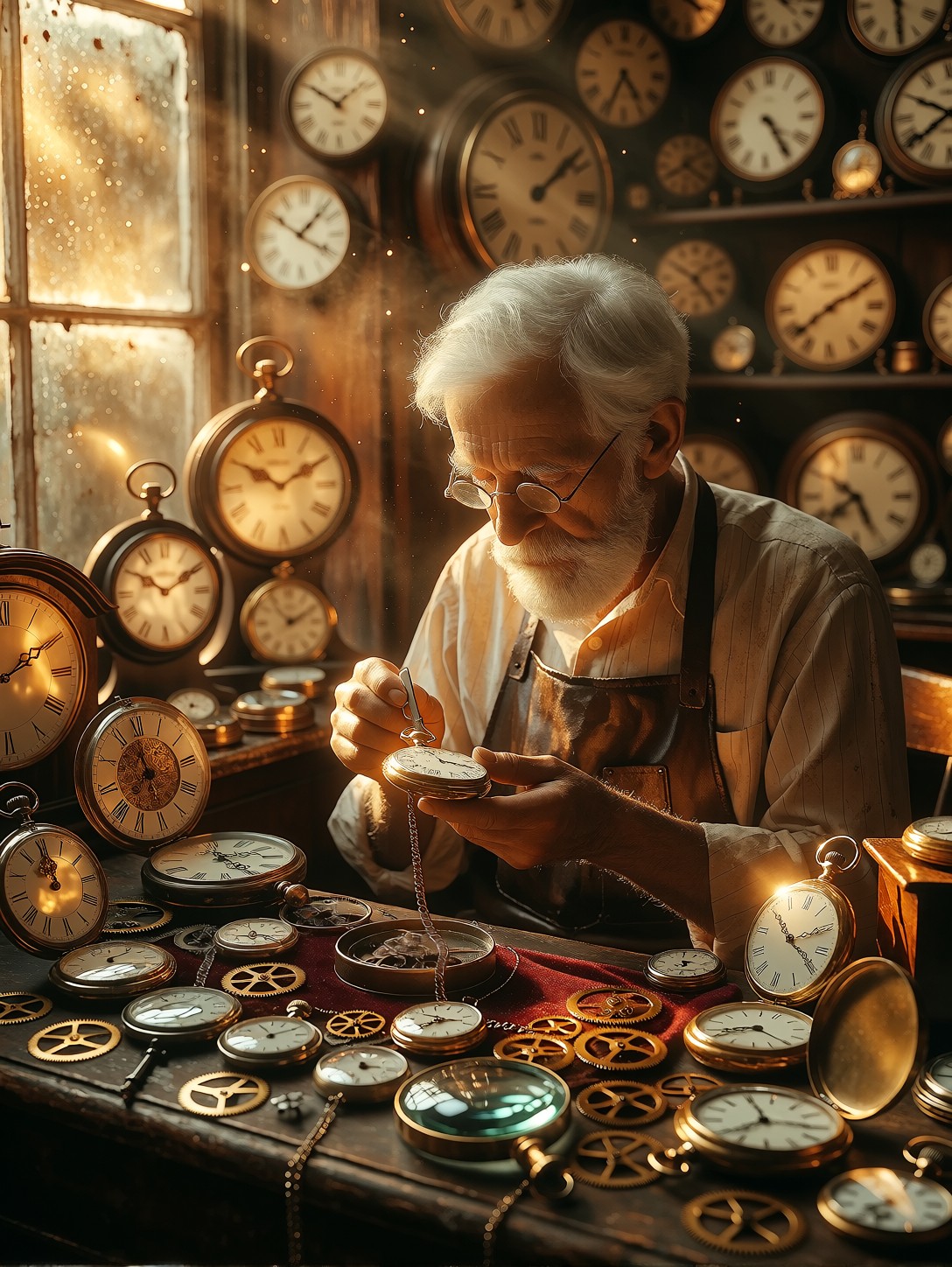
The chain of the pocket watch pooling like liquid gold across a leather apron is the immediate visual anchor of this piece, a stunning contrast to the deep, worn umber of the bench and the meticulous chaos of the workshop. Proxima Aurelia 2 excels at taking a rich visual narrative like this—the intimate act of winding a timepiece—and elevating it into a cohesive, dreamlike masterpiece. The model doesn't just render a man; it captures a moment of profound, meditative solitude.
The atmosphere is built on layers: the soft, hazy sepia glow of the background clocks, the dust motes dancing in the warm amber light, and the careful placement of every gear and spring. This blend of hyper-detail in the foreground (the watch, the key, the spectacles) and gentle abstraction in the background (the blurring wall of time) is where the aesthetic magic happens. It is a visual poem dedicated to the passage of time and the beauty found in craftsmanship 🕰️.
Finding the Perfect Use for Timepiece Art
This level of detailed, atmospheric digital art is perfect for visual storytelling in high-end projects. Consider using it as a cover for a historical fiction novel, a mood-setting desktop wallpaper for a creative professional, or as a centerpiece in a digital art gallery focusing on steampunk or cottagecore aesthetics. It also works exceptionally well in interior design concept boards to evoke a sense of 'cozy intellectual' or 'old world' charm.
Because the composition is tightly focused on the bench and the subject, a portrait or square aspect ratio (3:4 or 1:1) will best preserve the intimate, cluttered feeling of the workshop without losing the sense of depth provided by the dusty window light.
Settings for Proxima Aurelia 2 — Crafting a Dreamlike Masterpiece
Since Proxima Aurelia 2 specializes in aesthetics and composition, your primary job is to feed it strong visual adjectives and clear lighting cues. The model is designed to handle complexity, so we can afford a higher level of detail.
- CFG / Guidance: 6.0–8.0 — Since the prompt is very specific about the colors and the 'dreamlike bloom,' a slightly higher guidance scale will help the model adhere strictly to your defined palette of honeyed gold and deep umber.
- Steps: 30–50 for maximum quality. Given the "8k" request and the intricate scattering of gears and springs, high step counts are essential to ensure the textures are crisp despite the overall soft focus.
- Resolution / Aspect Ratio: 1024×1344 (4:5) for optimal portrait framing; use 16:9 only if you want to emphasize the entire dusty window and bench, sacrificing some intimacy.
Aurelia shines when the prompt is rich with sensory details. Don't just say "warm light"; say "warm amber afternoon light pouring through a tall dusty window." This gives the model concrete elements (dust, height, color) to work with.
Advanced Tips for Aurelia’s Aesthetic Strength
When using Aurelia, you can push the narrative further by adding emotional context. Instead of just "quiet, nostalgic, meditative mood," try adding phrases like "a moment of peaceful finality" or "a sanctuary against the march of time." These abstract emotional cues help the AI refine the visual storytelling.
Five Creative Ways to Push This Scene Further
Five Targeted Variations for the Clockmaker Prompt
- Shift the Era/Culture: Replace "wire-rimmed spectacles" and "brass pocket watch" with "heavy, gold-filigree monocle" and "a sapphire-encrusted hourglass." This instantly shifts the mood from Victorian craftsman to opulent, baroque royal.
- Alter the Focus/Composition: Change the framing from "sits at a cluttered wooden bench" to "Extreme close-up of a single ivory key turning in a brass winding mechanism." This eliminates the environmental storytelling and focuses entirely on the micro-detail and tactile nature of the work.
- Introduce Conflict/Urgency: Replace "delicately winding" with "frantic, sweating, hands trembling" and change the lighting to "harsh, directional midday sun." The gentle sepia glow is replaced by dramatic, high-contrast cinematic lighting, shifting the mood from meditation to crisis.
- Change the Material Palette: Swap "brass, copper, and mahogany" for "verdigris bronze, oxidized iron, and cracked slate." This drains the scene of warmth and shifts the aesthetic from nostalgic warmth to a gothic, industrial decay.
- Introduce a Narrative Element: Add a detail like "a single, wilted dried flower resting on the velvet tray" or "a partially burned letter lying next to the magnifying lens." This adds a layer of tragic or narrative depth, suggesting a character's personal history.
Two Prompts Ready to Generate
These two prompts take the base setup and apply two of the structural and tonal shifts above, maintaining the high-detail quality of the Aurelia model.
Variation: High-Contrast Cinematic Urgency — shifting the mood from gentle nostalgia to dramatic crisis by changing the action and lighting.
Dramatic cinematic shot of an elderly clockmaker, hands trembling and sweating, furiously winding a brass pocket watch. Harsh, directional midday sun casts deep, sharp shadows. Cluttered workbench strewn with gears and springs. Verdigris bronze and oxidized iron materials. High contrast, frantic energy, ultra-detailed, 8k, photorealism.
Variation: Opulent Baroque Opulence — shifting the subject from simple craftsmanship to aristocratic luxury and complex materials.
Baroque, hyper-detailed portrait of a wealthy horologist with a gold-filigree monocle, examining a sapphire-encrusted hourglass. The bench is lined with dark mahogany and inlaid silver. Opulent velvet trays, scattered jewels, and complex celestial maps. Warm, dramatic chiaroscuro lighting, luxurious textures, 8k, masterpiece.
Explore More Storytelling Art
If you enjoy the blend of history, detail, and evocative atmosphere found in this clockmaker piece, you might appreciate these other thematic pieces that leverage Aurelia’s aesthetic strengths to build rich, imaginative worlds.