

The Uncoupled Constellations: Crafting a Masterpiece of Cosmic Dread
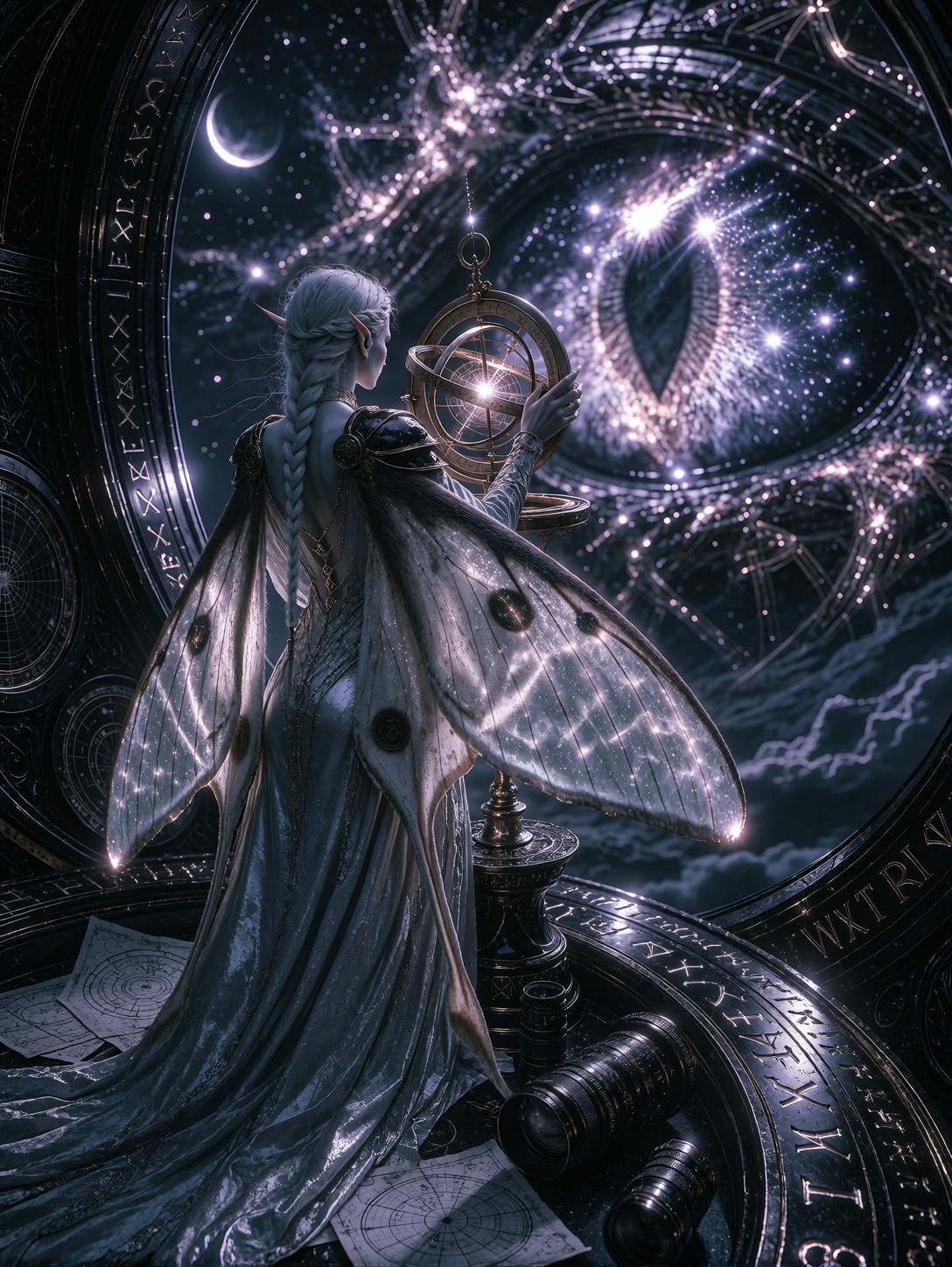
When constellations decide to abandon their ancient paths and reconfigure into a single, colossal, burning eye, the human reaction is not awe, but profound dread. This prompt leverages the extraordinary storytelling capabilities of Proxima Aurelia 2 to capture that precise moment: the fragile, pale figure of the elf astronomer, suspended between cold, abyssal violet and the terrifying brilliance of a cosmic transformation.
The model excels here by balancing the delicate elements—the translucent moth wings, the trembling brass astrolabe, and the silver robes rippling in solar winds—with the overwhelming scale of the astronomical horror. It is a study in the dreadful sublime, where the intricate, almost delicate, detail of the subject is dwarfed by the infinite, malicious complexity of the heavens.
Elevating Dark Fantasy and Cinematic Storytelling
This prompt is tailored for users seeking high-concept, narrative-driven AI art that feels like a frame ripped from a high-budget, cerebral science fiction epic. If you are designing cover art for a dark fantasy novel, creating mood pieces for a tabletop RPG campaign, or building a visual aesthetic around existential dread, this is your prompt. It works best in a cinematic widescreen aspect ratio to fully convey the vertigo of the open sky.
The extreme detail requested—from the carved glyph of the obsidian dome to the scatter of lens charts—makes this ideal for print media or high-resolution digital wallpapers.
Optimization for Proxima Aurelia 2 — Setting the Stage for Dread
Since Proxima Aurelia 2 is designed for exceptional aesthetics and intelligent composition, we need to provide it with strong structural cues while allowing the LoRAs to layer the necessary darkness and grandeur.
- Guidance Scale (CFG): Aim for a moderate value of
7.0–9.0. Given the complexity of the "staring eye" and the detail of the LoRAs, a moderate CFG will ensure the model follows the prompt's intricate demands without sacrificing creative freedom. - Steps: Set this high, ideally
30+. The fine details—the starlight dust on the wings, the etched glyph on the dome, and the solar wind's effect on the robes—require significant sampling to resolve cleanly. - Resolution: For the 'wide-angle cinematic shot,' start with a wide aspect ratio like
1920x1080or even wider if your model supports it, to maximize the feeling of open sky.
Mastering the LoRA Stack: The Three Pillars of Dark Opulence
This prompt benefits immensely from stacking three powerful LoRAs. They are designed to build on each other: GPT style provides the gilded, mythic scale; Gilded Abyss adds the baroque, dark-fantasy textures; and Ethereal Dark Fantasy Painting grounds the result in a moody, highly detailed painterly style.
- GPT style (55%): This should be the anchor, ensuring the celestial, gilded quality is present across the scene.
- Gilded Abyss (50%): This reinforces the darkness and provides the rich, baroque textures for the observatory and armor/robes.
- Ethereal Dark Fantasy Painting (50%): Use this to maintain the dramatic, moody lighting and high level of textural intricacy.
Creative Variations: Expanding the Cosmic Horror
5 Targeted Variations for This Prompt
- Shift the Celestial Event: Replace "colossal staring eye" with "a swirling nebula of dying purple gas" — changes the horror from focused observation to vast, indifferent chaos.
- Change the Subject's State: Modify "trembling hands" to "hands outstretched, tracing the pattern on the astrolabe, eyes closed" — shifts the mood from fear to desperate communion with the horror.
- Alter the Color Palette: Swap "Cold violet and abyssal blue" for "Molten gold and toxic green" — shifts the atmosphere from cosmic dread to virulent, biological nightmare.
- Add Environmental Pressure: Add "A fissure of raw, crackling energy glows at the base of the dome" — introduces an immediate threat and source of light/drama.
- Introduce a Witness: Add "a tiny, distant figure, like a cloaked monk, watching from the shadowed entrance of the observatory" — provides scale and a secondary perspective on the madness.
Two Prompts Ready to Generate
We will apply two distinct variations to this prompt—one focusing on the color shift to introduce biological horror, and another focusing on the subject's action to deepen the narrative.
Variation: Toxic Nightmare — shifts the color palette from cold cosmic blues to fiery, toxic greens and golds, making the horror feel more biological and virulent.
Cosmic horror, a pale elf astronomer with translucent moth wings dusted in toxic green starlight stands atop a black obsidian observatory dome, brass astrolabe raised, measuring a night sky where constellations have uncoupled and realign into a colossal swirling nebula of dying purple gas. Silver robes ripple in solar wind, molten gold and toxic green palette, terrifying sublime mood, highly detailed, 8k, cinematic wide shot from behind.
Variation: Communion with the Void — changes the action from trembling fear to a state of desperate, focused communion with the cosmic event.
Cosmic horror, a pale elf astronomer with translucent moth wings dusted in starlight stands atop a black obsidian observatory dome. She is tracing the pattern on the brass astrolabe with closed eyes, measuring a night sky where constellations form a colossal staring eye of burning stars. Silver robes ripple in cold solar wind. Cold violet and abyssal blue palette, sickle moonlight glinting on the dome's carved glyph, wide-angle cinematic shot, dreadful sublime mood, highly detailed, 8k.
More Masterpieces in the Cosmic Horror Style
Explore these related prompts to find further inspiration for blending high-fantasy aesthetics with terrifying cosmic concepts: