Chiaroscuro in a Decaying Corridor: Anatomy of a Horror Still
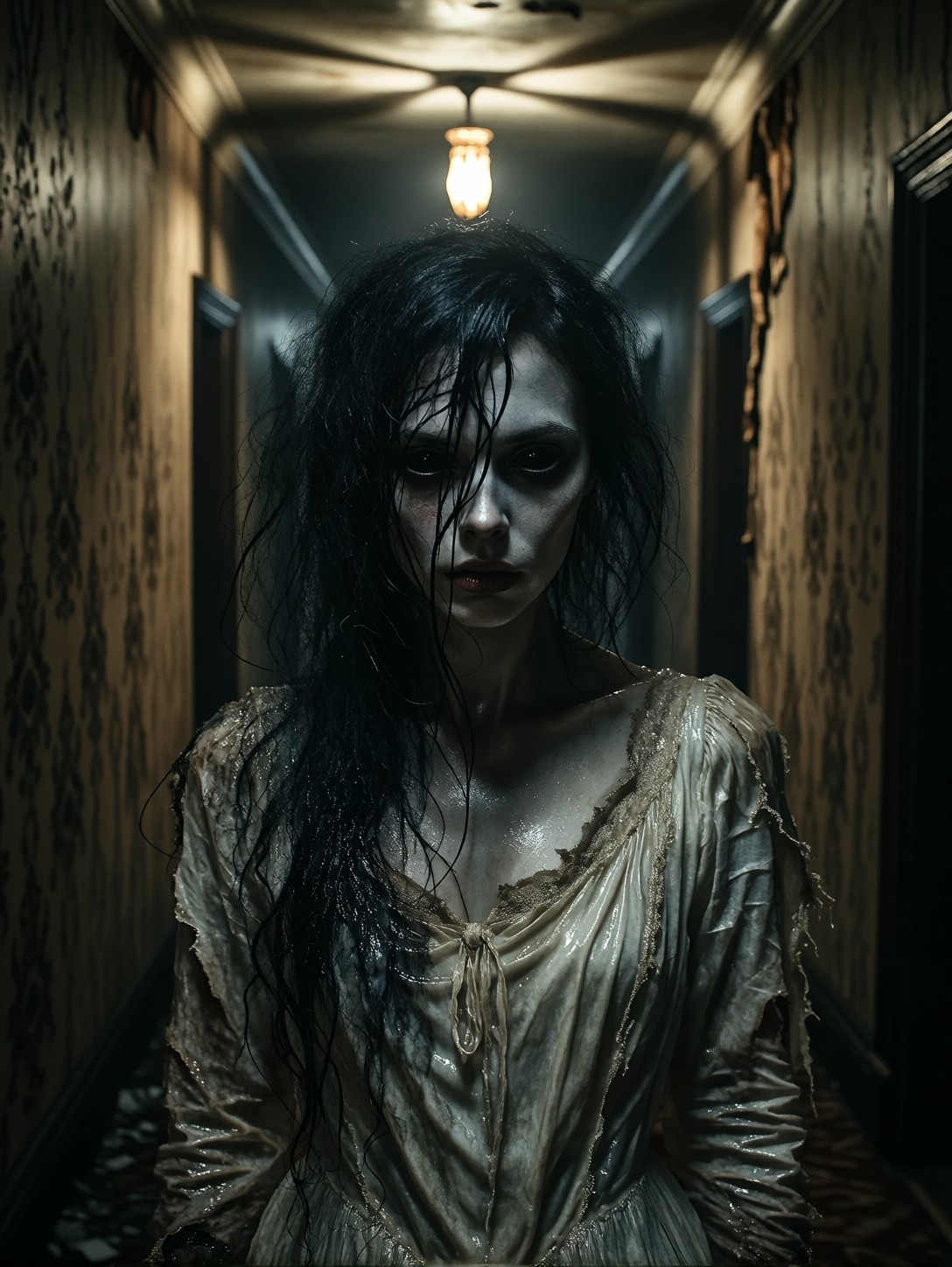
The single most powerful element here is the negative space of the corridor. A long, dim hallway with decaying wallpaper creates a natural vanishing-point composition that pulls the eye straight to the woman at the far end — she's not placed in the scene, she's the destination the eye was always going to reach. The flickering ceiling light does the rest: it carves her face in high-contrast relief while the wet, tattered ivory dress catches just enough light to read as texture rather than silhouette.
The hyper-realism directives — visible pores, goosebumps, raw grain — push Proxima Aurelia 2 past "stylised portrait" into documentary territory. The model's strength in intelligent composition means it reads the corridor's perspective lines and the subject's central placement as a unified cinematic frame, not just a woman in a hallway.
Horror Film Stills, Album Art, and Gothic Editorial
This prompt produces output that reads as a production still from a psychological thriller — the kind of frame you'd see in a promotional poster or a trailer freeze. It works equally well as dark album cover art, a gothic fashion editorial image, or a mood reference for a horror short film's visual bible.
Stick to a portrait or square crop (3:4 or 1:1). The corridor's vertical depth and the subject's central placement both lose impact in wide landscape formats where the hallway stretches too far and the face shrinks to a thumbnail within the frame.
Settings for Proxima Aurelia 2 — Letting Composition Do the Heavy Lifting
Proxima Aurelia 2 is built on the Flux Schnell architecture, so standard Flux guidance values apply. The model's documented strength in visual storytelling means it will interpret the corridor's perspective and the lighting direction intelligently even without micro-managing every parameter.
- CFG / Guidance:
3.0–3.5— the chiaroscuro contrast is already baked into the prompt; pushing guidance higher will crush the shadow detail in the wallpaper - Steps: 30 for full skin-pore and grain resolution; 12 is enough to check composition and shadow placement
- Resolution:
1080×1440(3:4 portrait) or1344×1344(square) — both preserve the corridor's depth without over-compressing the subject
The "raw photo grain" and "hyper-realistic skin texture" keywords are doing real work here — at 30 steps and 1080px+, Aurelia 2 resolves individual pore detail and fabric weave in the dress. At lower resolutions these details smear into flat tone.
Five Ways to Shift the Horror Register
5 Targeted Variations for This Corridor Scene
- Swap the location: Replace "hotel corridor" with "abandoned subway platform, flickering fluorescent tube, wet concrete floor" — the industrial geometry replaces the domestic decay, shifting the mood from haunted hotel to urban dread
- Invert the light source: Change "single flickering ceiling light" to "candlelight held in her own hand, illuminating only her chin and the dress hem" — the shadow now falls upward, the face is half-void, and the composition becomes far more claustrophobic
- Add a second figure: Append "a blurred, out-of-focus silhouette of a child standing at the very far end of the corridor, barely visible in the shadow" — the depth layer now carries narrative weight without distracting from the primary subject
- Shift the fashion register: Replace "tattered ivory vintage dress" with "blood-stained surgical gown, rubber gloves, stethoscope around neck" — the horror moves from gothic-romantic to medical-thriller territory, same lighting, completely different genre
- Warm the palette: Change the lighting to "sickly green hospital fluorescents, slightly overexposed, colour cast bleeding into the wallpaper" — the cold blue-grey of the original becomes toxic and clinical, reading more like a found-footage frame
Two Prompts Ready to Generate
Both apply one of the variations above directly and are tuned for Proxima Aurelia 2 at the recommended settings.
Variation: candlelit self-illumination — the light source moves from ceiling to the subject's hand, inverting the shadow direction and tightening the composition
Atmospheric psychological horror photography, cinematic shot. A woman with hollow dark-ringed eyes and messy pitch-black hair hanging over part of her pale face. She holds a single lit candle in her hand at the end of a long dim hotel corridor with decaying vintage wallpaper. The candlelight illuminates only her chin and the hem of her tattered rain-soaked ivory dress, the rest of her face dissolves into shadow. Unsettlingly calm unblinking expression gazing into the lens. Hyper-realistic skin texture, visible fine pores, raw photo grain, moody nocturnal atmosphere, 8k.
Variation: sickly green clinical palette — the lighting shifts from warm flicker to toxic fluorescent, the wallpaper bleeds green, the genre moves from gothic to medical thriller
Atmospheric psychological horror photography, cinematic shot. A captivating yet eerie woman with hollow dark-ringed eyes and messy pitch-black hair over part of her pale face. She stands at the end of a long abandoned hospital corridor, peeling mint-green wallpaper, single sickly fluorescent tube flickering overhead, slightly overexposed, green colour cast bleeding into the walls. She wears a blood-stained surgical gown and rubber gloves. Unsettlingly calm unblinking gaze into the lens. Hyper-realistic skin, visible pores, raw photo grain, found-footage aesthetic, 8k.
More Atmospheric Portraits in This Direction
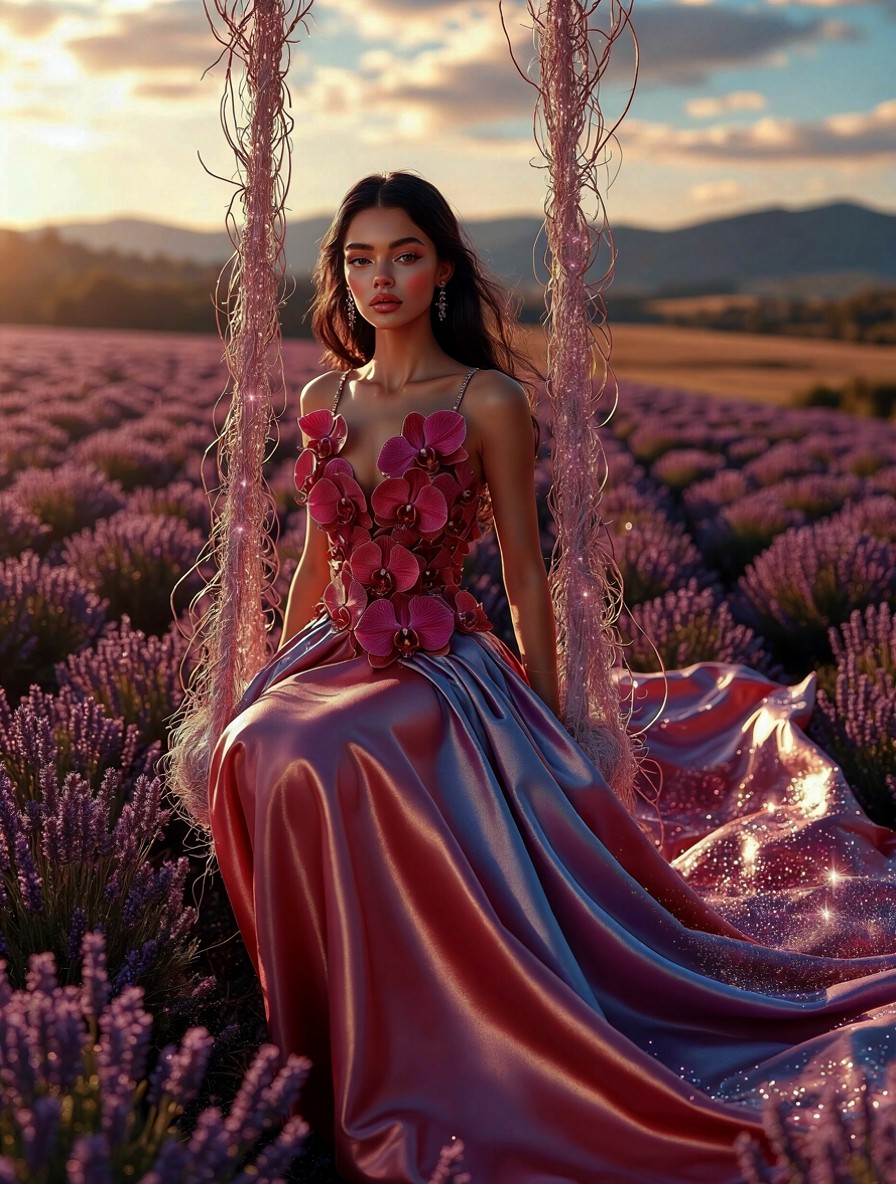
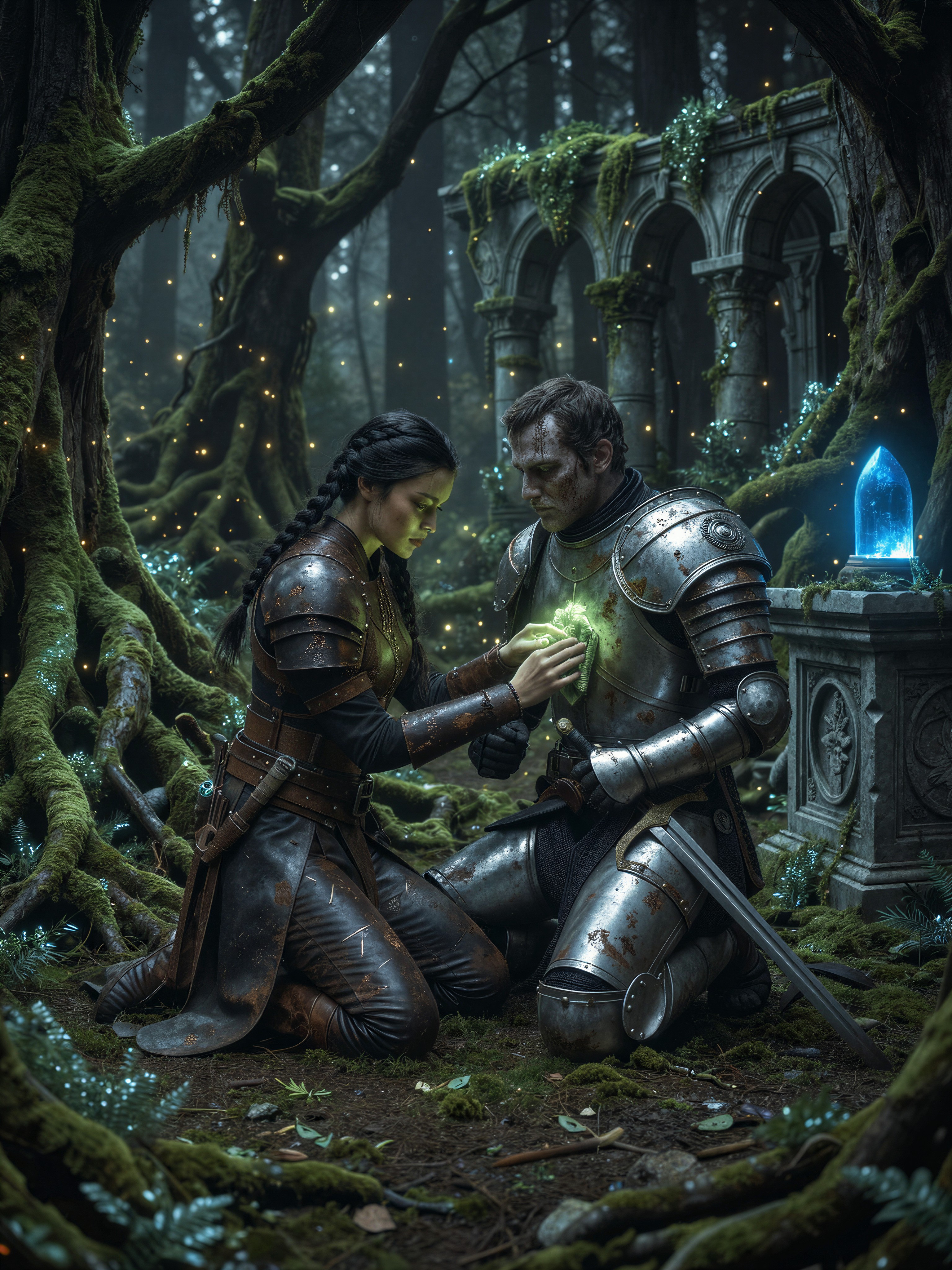
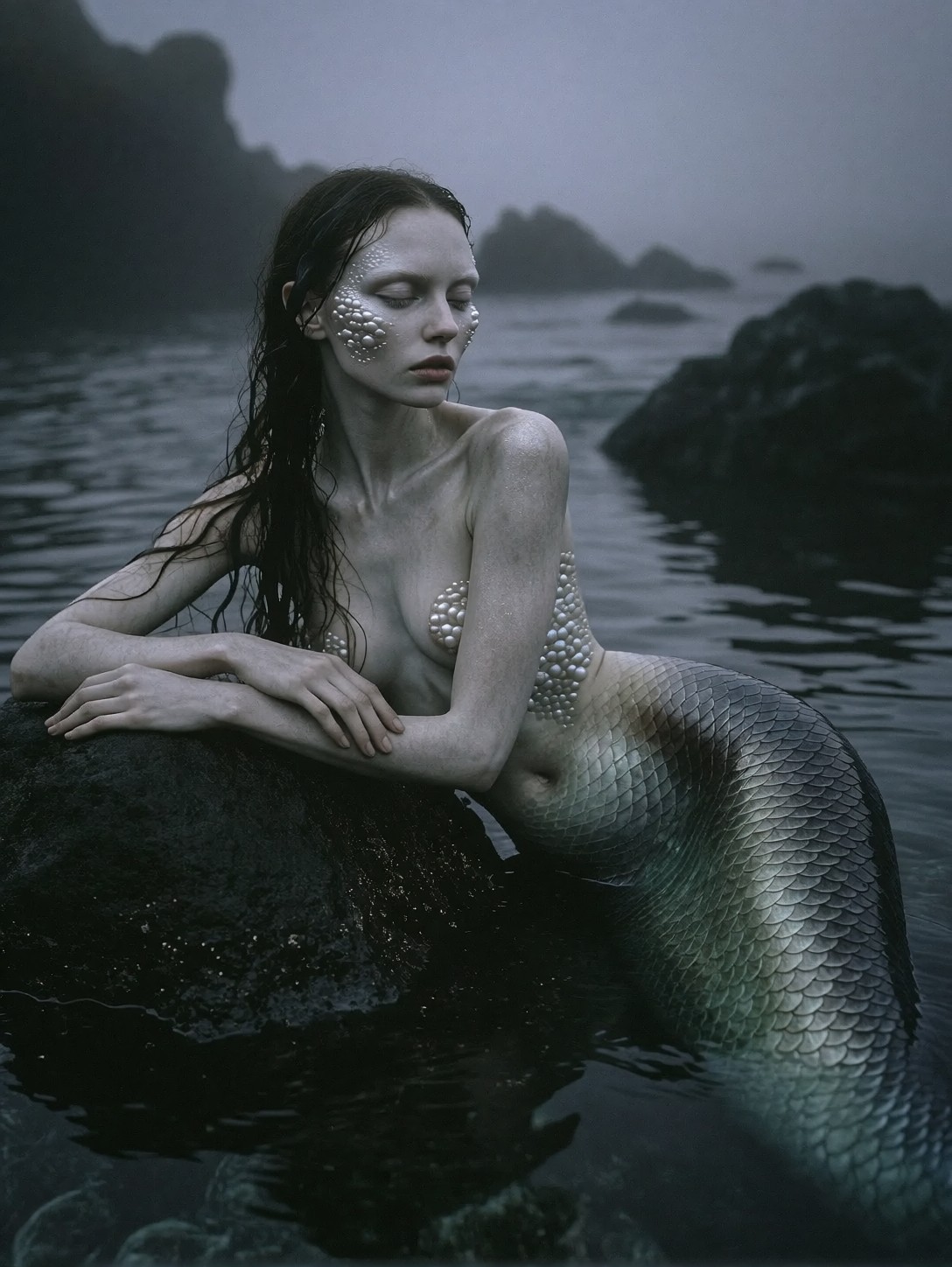
These prompts from the same collection explore figure-and-light compositions with different emotional registers — luminous serenity, regal drama, twilight fantasy: