The Intersection of Melancholy and Neon: Mastering Qwen's Urban Noir
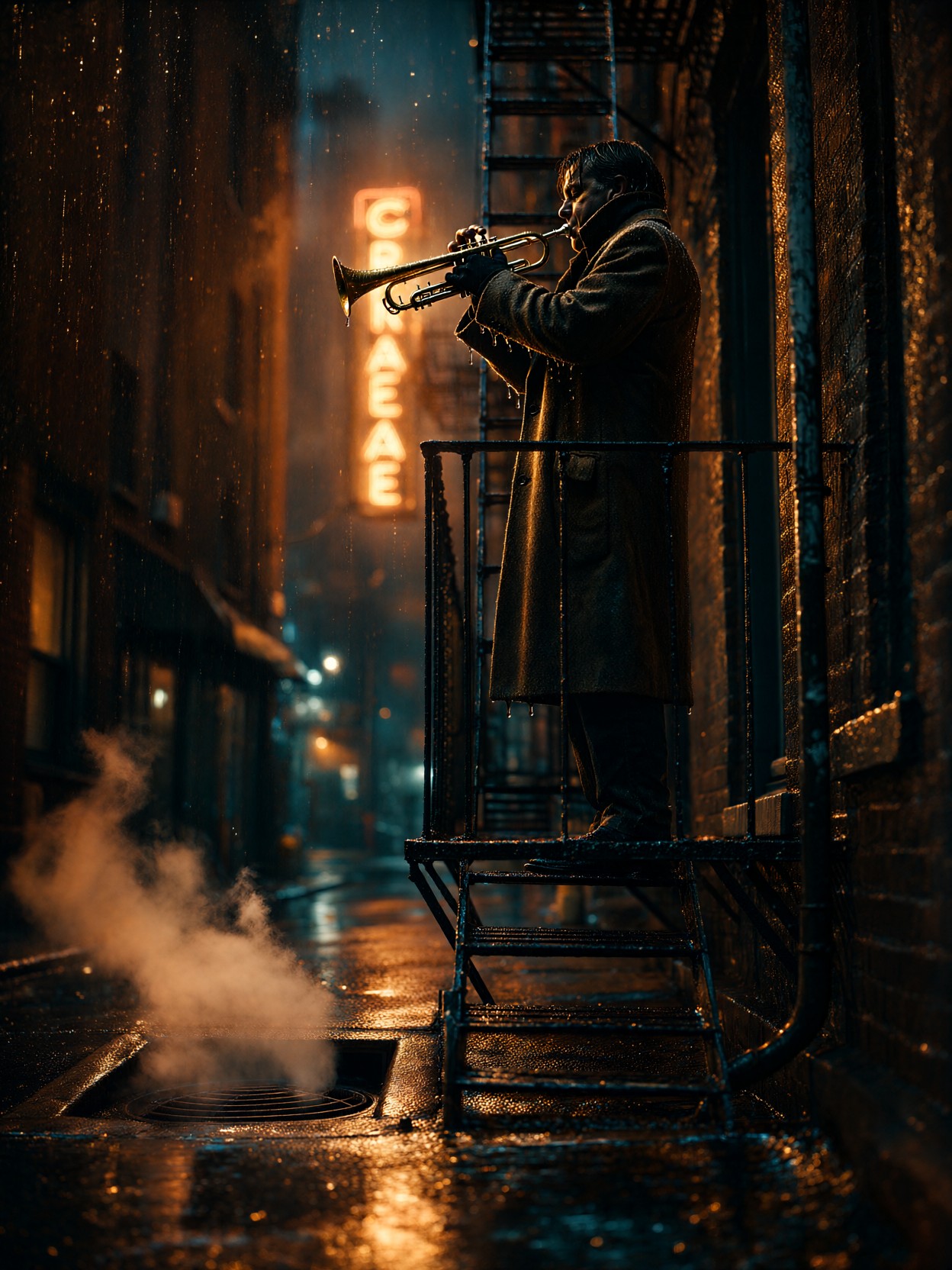
The way the worn wool of the trumpet player's overcoat absorbs the damp night and contrasts against the sudden, flickering amber glow of a neon sign defines this image. It is not just a portrait; it is a slice of high-contrast urban melancholy. Qwen 2.1 excels at delivering the kind of fine detail and lifelike lighting necessary to make rain-slicked asphalt and individual brass reflections feel tangible.
By placing a lone figure in the dramatic interplay of sodium-orange light and deep teal shadow, the prompt leverages a classic noir palette—burnt amber, ink blue, and wet asphalt black. The low angle and the shallow depth of field ensure that while the trumpet player remains the sharp, atmospheric focus, the bokeh of glittering rain streaks provides a perfect texture to the moody, 8k composition. 🎺
Who Needs This Gritty, Cinematic Vibe?
If you are developing a story set in a futuristic metropolis or need high-end concept art for a neo-noir film, this style is perfect. This prompt is ideal for:
- **Album Art:** Specifically for jazz, blues, or dark synthwave artists seeking a moody, atmospheric visual identity.
- **Film Storyboarding:** Creating establishing shots or character close-ups for a dramatic urban thriller.
- **Digital Art Inspiration:** Using Qwen 2.1's strength in fine detail to render specific textures like wet fabric and polished brass.
Since the prompt is very detailed, I recommend sticking to a portrait or medium shot orientation (e.g., 3:4 or 2:3) to keep the focus tight on the character and the immediate street scene.
Generating the Atmosphere with Qwen 2.1
As the newest model, Qwen 2.1 brings strengths in lifelike portrait lighting and fine detail, which is crucial for making the rain and the neon sign feel real. Because the prompt is highly specific, precise parameter control is key to maintaining the "cinematic" look without it becoming overly stylized.
- Guidance Scale: Try
7.5–9.0. The strong directional lighting (amber neon vs. teal shadows) requires a higher guidance scale to ensure the model respects the color and contrast rules you've set. - Steps: Use
30for the highest quality, ensuring every water streak and grain of the wool coat is rendered. - Resolution: Since Qwen 2.1 offers native 2K output, utilize this for consistent quality. If upscaling, ensure you use a high-quality upscaler to maintain the sharp 35mm anamorphic aesthetic.
Pushing the Narrative with Prompt Variations
Five Targeted Variations for This Cinematic Scene
- Shift the Mood to Romantic Noir: Change "melancholic" to "hopeful, defiant," and swap the "amber glow" for a "soft, saturated ruby red neon sign." The mood shifts from sadness to passionate resilience.
- Change the Instrument: Swap "trumpet player" for "a saxophone player with a scarred face." The specific instrument changes the shape of the light catching the brass and alters the character's perceived personality.
- Change the Setting's Time of Day: Instead of "night," use "just before dawn, heavy fog." The neon signs would be diffused into hazy, pastel ghosts, softening the sharp contrast of the noir look into a dreamlike scene.
- Add a Secondary Subject: Introduce "a blurred figure in a trench coat passing in the deep teal shadow." This immediately adds a layer of plot and narrative tension to the static scene.
- Adapt the Medium: Change "Cinematic Photography" to "1950s Film Grain, Technicolor still." This forces the model to adopt the aesthetic of a specific historical film look, replacing modern digital sharpness with analog texture.
Two Prompts Ready to Generate
We will apply two variations to push the emotional and aesthetic boundaries of the original prompt, keeping the core noir elements intact.
Variation: hopeful defiance — swapping the sad trumpet for a saxophone and changing the amber sign to a vibrant ruby red neon sign, injecting passion into the melancholy.
Cinematic Photography, moody neo-noir. A lone saxophone player stands on a rain-slicked fire escape at night, silhouetted against the vibrant ruby red glow of a flickering neon sign. His worn wool overcoat drips water, brass instrument catching a sliver of light as he lifts it. Steam rises from a street vent, drifting through pools of saturated red and deep teal shadow. Shot from a low angle on 35mm anamorphic lens, shallow depth of field, rain streaks glittering in the bokeh.
Variation: pre-dawn mystery — replacing the neon glow with heavy fog and changing the character's pose to one of waiting, transforming the scene into a quiet, atmospheric mystery.
Cinematic Photography, neo-noir, just before dawn, heavy fog. A lone trumpet player stands still on a rain-slicked fire escape. The scene is illuminated by diffused, hazy streetlights, casting long, soft shadows. No sharp neon sign, only pools of muted sodium-orange light through thick mist. Water drips slowly from his worn wool overcoat, soaking into the wet asphalt below. 35mm anamorphic lens, ultra-detailed, atmospheric, high resolution.
More Urban Noir Scenes to Explore
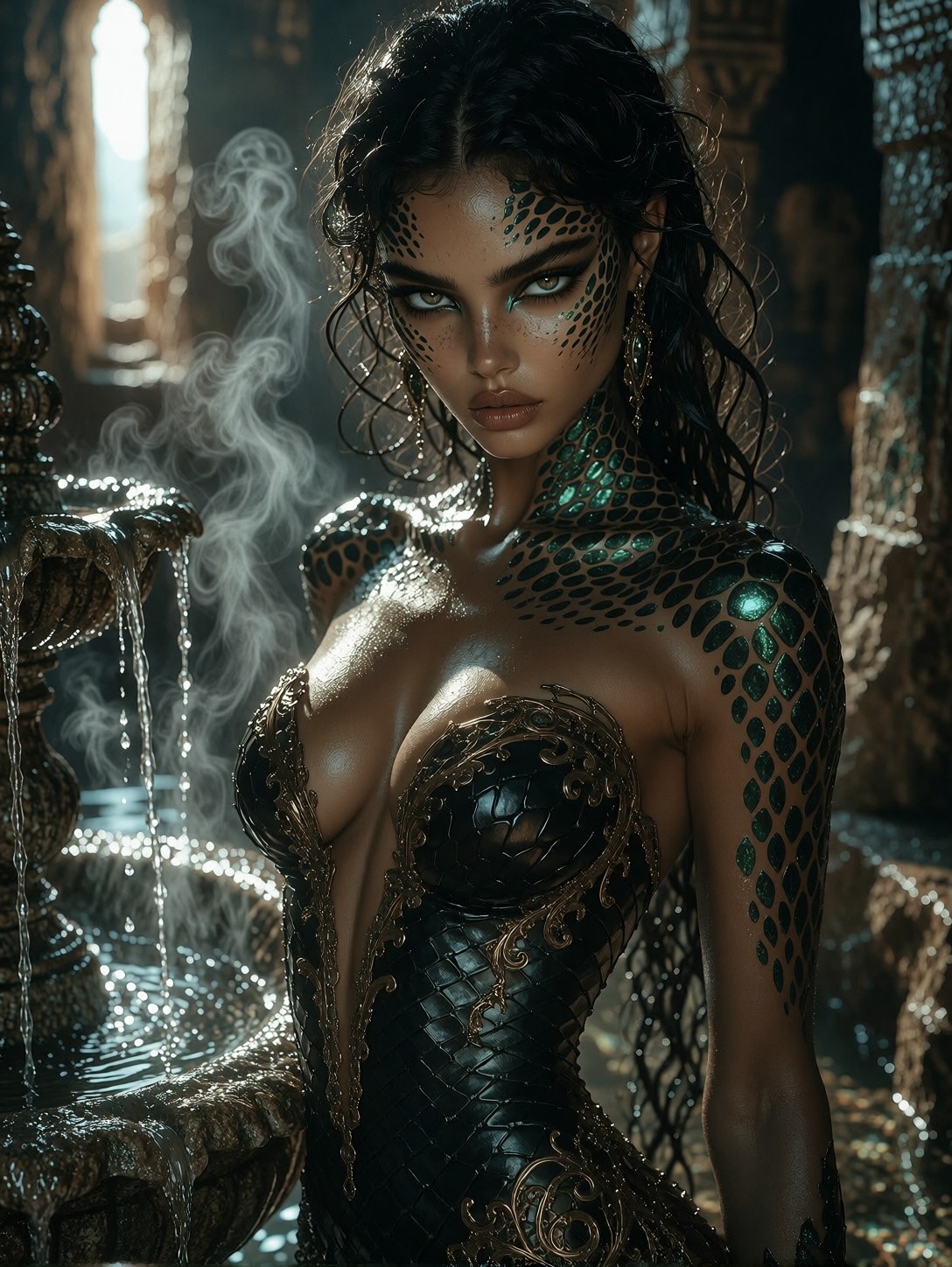
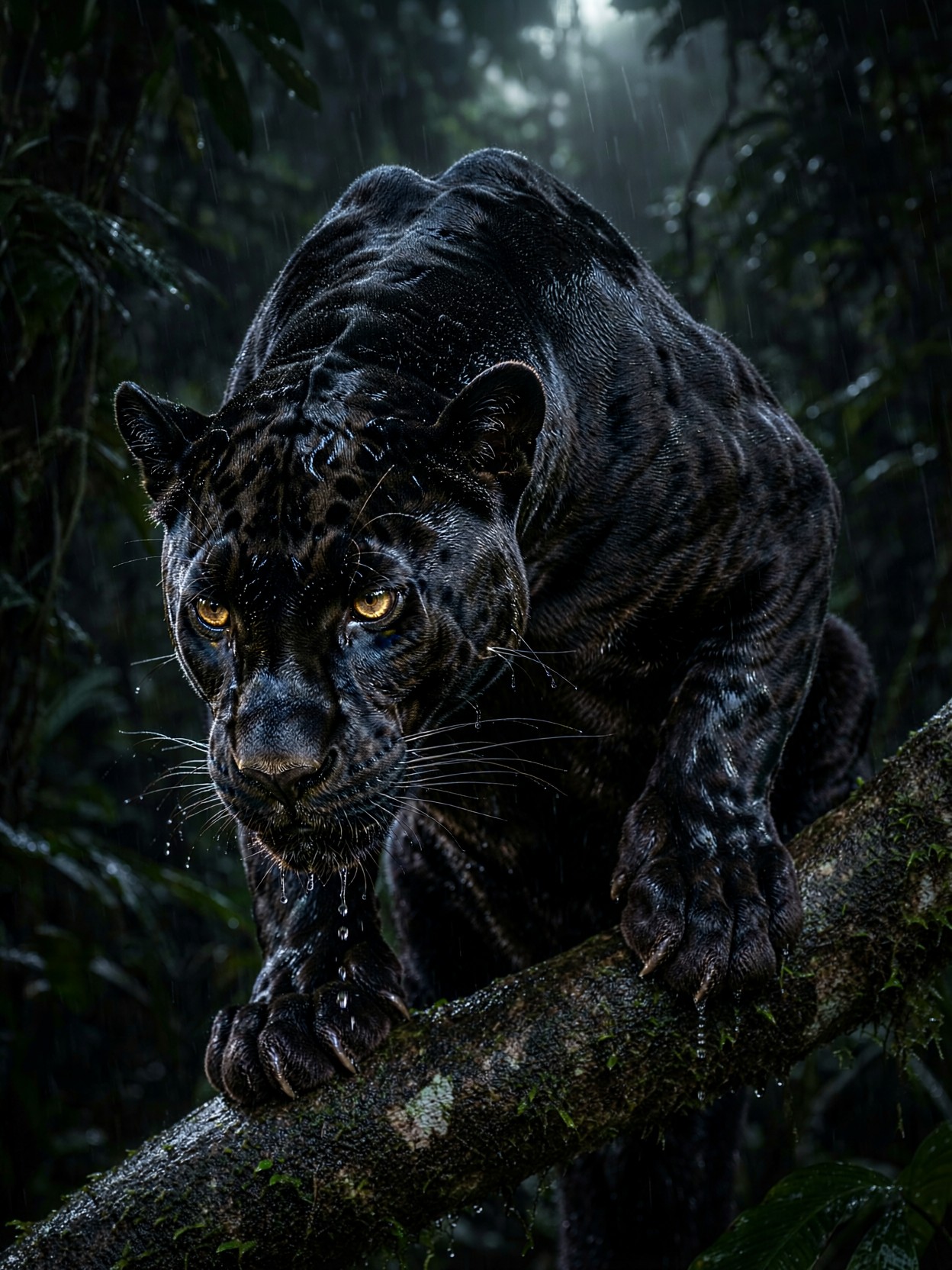
The aesthetic of deep shadows and vivid, contrasting light is a powerful creative tool. You can apply these same lighting concepts to other subjects, like architecture or dramatic environmental portraits:


Explore AI Generation Tools on Proxima.art
Proxima.art is a free AI image generator powered by Flux, Qwen, HiDream, and other state-of-the-art models. Browse prompts, copy them to the generator, and create stunning AI art instantly.