

The Chaos and Majesty of the Morrigan’s Storm-Weaving
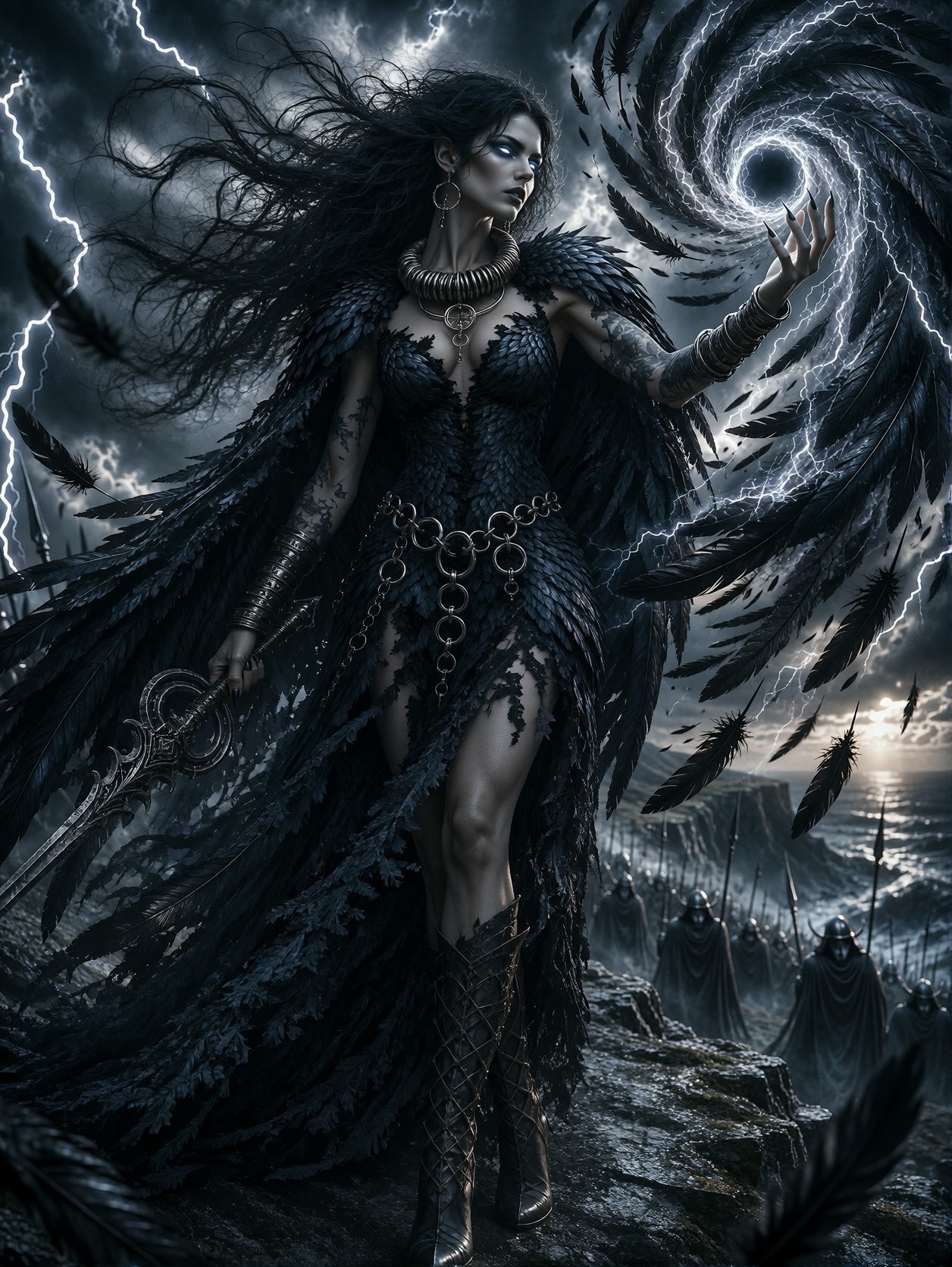
A spiraling storm of black feathers igniting into thunderous clouds defines this piece—it’s not just a portrait; it’s the visual manifestation of a goddess commanding entropy. ⚡ The Proxima Aurelia 2 model excels at capturing the immense scale of this scene, blending the regal presence of the Morrigan with the raw, untamed power of the windswept clifftop.
The prompt works because it provides multiple layers of visual storytelling: the texture of the tattered cloak, the sharp, defining glint of dark iron rings against the muted slate palette, and the atmospheric depth created by the shadows stretching across the ghostly battlefield below. The combination of intricate detail and dramatic rim lighting from the lightning creates an image that feels both mythic and palpably dangerous.
Where This Epic Dark Fantasy Concept Thrives
This level of intricate detail and intense atmosphere is tailor-made for high-stakes creative projects. If you are developing a modern dark fantasy universe, this prompt is ideal for establishing key visual identities. Think high-end collectible statues, complex video game character concept sheets, or the dramatic, large-format cover art for a grim epic novel.
For the best impact, keep the focus on the three-quarter dynamic angle. While the full body shot is powerful, consider a slightly wider aspect ratio, like 2:3 or 9:16, to ensure the sprawling battlefield and the rising storm clouds are given adequate space to breathe, maximizing the atmospheric depth.
Optimization Settings for Proxima Aurelia 2
Proxima Aurelia 2 is designed for "breathtaking masterpieces," meaning it thrives on complexity. However, managing the four powerful LoRAs provided requires careful calibration to ensure they contribute to the scene rather than overpowering the core dark fantasy concept.
- Guidance Scale:
7.5–9.0— Since the prompt is so highly detailed, a higher guidance scale ensures the model adheres strictly to the specific visual instructions like "tattered cloak" and "dark iron rings." - Steps: 35–50 — Do not rush the complexity of the feather rendering and the lightning threads; allow the model to resolve every detail of the storm.
- Resolution: 1664×2256 (9:16) — This vertical format emphasizes the height of the clifftop and the upward movement of the storm, enhancing the feeling of grandeur.
Balancing the LoRA Styles
You have selected four very distinct LoRAs, ranging from opulent celestial styles to oppressive horror. To keep the final image anchored in the "Dark Fantasy" tone, we must prioritize the atmospheric and oppressive styles over the purely 'Glamour' elements:
- Obsidian Nightmare Horror Style (0.40): This is your anchor. Keep this weight high to maintain the oppressive, dark mood and the sense of corrupted environment.
- Velvet Crypt (0.45): This adds the necessary texture—the "tattered" and "decaying" aspect—which fits the Morrigan’s battle-worn aesthetic.
- GPT style (0.80): Keep this high for the quality and "mythic scale," but be aware it pushes towards *opulence*; it is the main source of the "regal" quality.
- Dark Glamour 80s (0.35): This should be kept lower. We want the "glamour" to feel tarnished and decayed, not bright and pastel, so it shouldn't overpower the slate and charcoal palette.
Five Ways to Shift the Narrative of the Goddess
5 Targeted Variations for This Prompt
- Shift the context to ruin: Replace "windswept clifftop" with "throne of fractured obsidian in a crumbling cyclopean ruin" — this makes the storm feel less like a natural occurrence and more like her own power manifesting from her seat of power.
- Change the color language: Replace "muted slate, charcoal" with "corrupt neon violet and toxic green" — shifts the mood from ancient tragedy to a cyberpunk, bio-horror deity.
- Introduce a foil: Add "two desperate, shadowy supplicants kneeling at her feet" — this immediately establishes a power dynamic and gives the composition a clear narrative focus.
- Modify the action: Change "weaving a spiraling storm" to "casting a static field of suspended, petrified raven feathers" — shifts the scene from chaotic action to tense, terrifying stillness.
- Change the focus to internal lore: Replace "battlefield of ghostly silhouettes" with "a single, monolithic stone altar etched with her sigil" — grounds the epic chaos in a specific, cult-like religious setting.
Two Prompts Ready to Generate
We will explore the concept of the Goddess of Ruin and the terrifying shift into a corrupted, neon-drenched hellscape, both utilizing the complex LoRA blend.
Variation: Throne of fractured obsidian — shifting the setting from open wilderness to a seat of dark, crumbling authority, making the storm feel contained and deliberate.
Full body character art of the Morrigan, tall regal war goddess seated on a throne of fractured obsidian in a crumbling cyclopean ruin, tattered cloak of layered raven feathers, silver torque, dark iron rings, standing on a dais, weaving a spiraling storm of black feathers, dramatic rim light from lightning, muted slate and charcoal palette, moody atmospheric depth, highly detailed, 8k.
Variation: Corrupt neon violet and toxic green — swapping the natural storm for a hellish, cyberpunk aesthetic, transforming the goddess into a nightmare icon.
Fantasy Game Character, Morrigan, cyber-goddess, full-body character art, tattered cloak of layered iridescent raven feathers, silver chrome torque, dark iron rings, standing amidst toxic neon violet and toxic green storm clouds, feathers igniting into glitching lightning threads, shadowy figures in futuristic armor below, dramatic rim light, hyper-detailed, 8k, cyberpunk dark fantasy.
More Dark Mythology Concepts in This Style
If you enjoy the heavy thematic weight and intricate detail of the Morrigan, these related prompts explore similar themes of power, nature, and dark fantasy iconography: