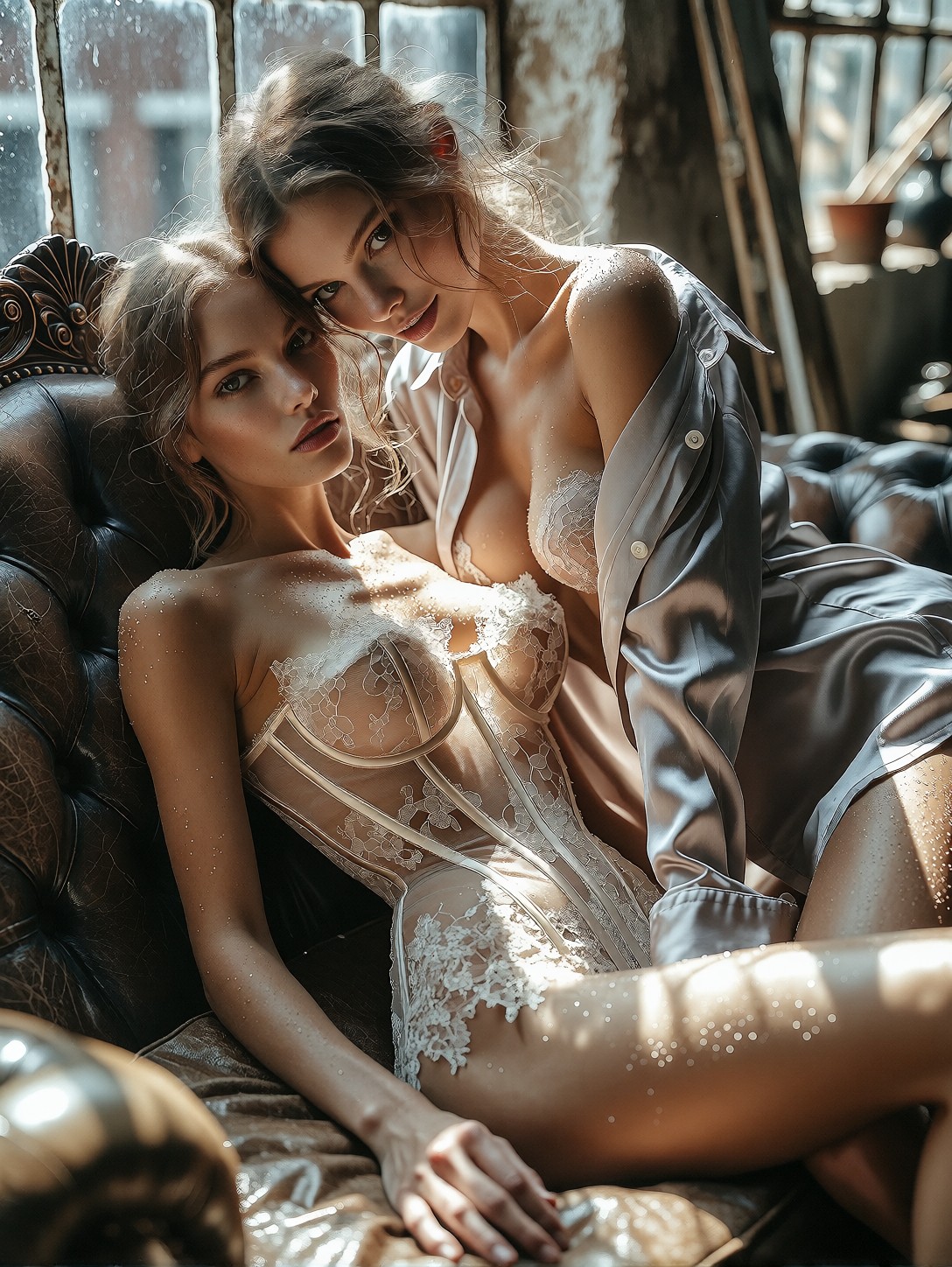


Sheer Lace and Heavy Leather: The Anatomy of Light
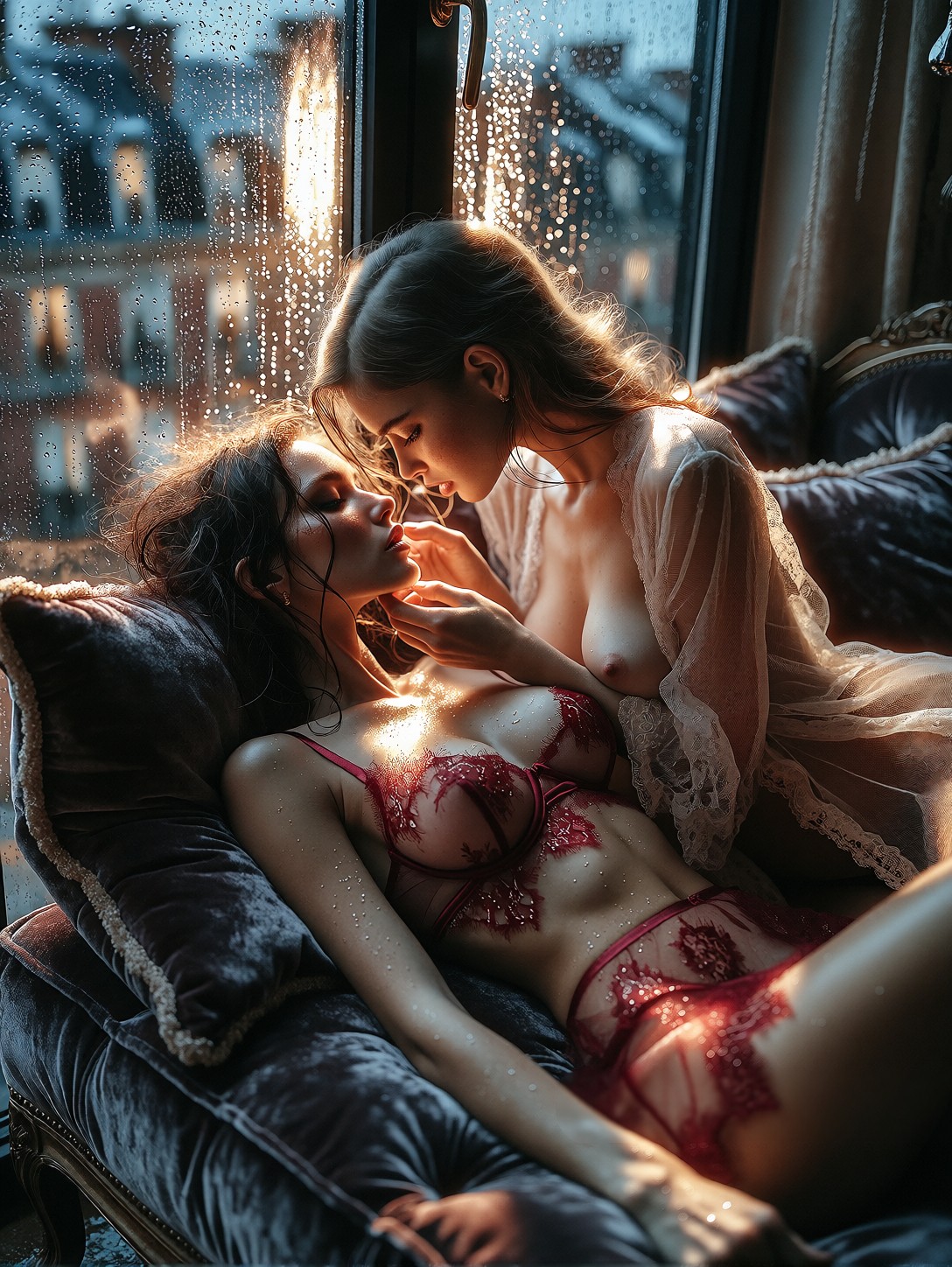
The interplay of sheer cream lace against heavy, dark vintage leather creates an immediate visual tension — one material begs to be touched, the other swallows the light. When a pale gray silk shirt slides off one shoulder, catching that same industrial window light, you get a study in translucency that defines this composition. Proxima Aurelia 2 treats these textiles with remarkable intelligence, translating descriptive words into actual fabric physics rather than flat texture maps. The high chiaroscuro contrast carved by the sunlit loft does more than set a mood; it sculpts the subjects, turning skin tones and water droplets into focal points that naturally draw the eye inward. It is fine-art photography at its most deliberate, where every fold of fabric and lock of hair serves the overall cinematic storytelling.
Editorial Spreads, Novel Covers, and Character Sheets
Editorial fashion photography, contemporary romance book covers, and sophisticated character concept sheets are natural homes for this kind of atmospheric duality. The horizontal spread of the subjects on a vintage leather sofa means you will want to step away from traditional vertical framing. A 16:9 cinematic ratio or a square composition allows the spatial relationship between the two figures to breathe without cutting off the architectural windows that drive the lighting. It works exceptionally well for digital magazines, high-end art prints, and narrative-driven game assets where chemistry needs to be communicated without a single line of dialogue.
Generation Parameters for Proxima Aurelia 2
Aurelia 2 is built for intelligent composition and rich visual storytelling, meaning it responds beautifully to atmospheric cues without needing a wall of technical modifiers. To keep the chiaroscuro lighting from clipping the highlights on the silk or lace, lean into a moderate guidance scale.
- CFG / Guidance:
3.5–4.0— keeps the dramatic shadows intact while preserving smooth gradients on skin and fabric - Steps: 25–30 to fully develop the water droplets and fine lacework
- Resolution:
1344×768for a wide, editorial framing; drop to1024×1024if you prefer an intimate square crop
Aurelia 2 thrives on environmental storytelling. Let the window light and leather texture carry weight — adding too many camera modifiers will actually fight against its natural compositional strengths.
Layering the LoRA Styles
The anatomy-focused LoRAs here act as strong directional forces. Running Ski Slope Breasts (XXL) at 0.95 will heavily dictate the silhouette of both figures, creating that exaggerated, stylized contour. Pairing it with the Breast Size Slider at 3.00 amplifies volume significantly, so monitor the output closely to ensure the proportions remain balanced with the rest of the scene.
The Midjourney-Style Rendering LoRA at 0.70 works best as a finishing layer; it boosts contrast and adds that signature cinematic polish without overriding the specific fabric details you've described. Remember that weights in the 30–60 range offer subtle influence, while anything 70+ pushes toward dominant styling — keeping the rendering style just below the anatomy weights ensures the scene's lighting and composition stay grounded.
Five Directives to Reshape This Atelier Scene
5 Targeted Variations for This Prompt
- Rewrite the environment: Swap "artist's loft" and "industrial windows" for a "dimly lit conservatory, hanging ferns, diffused green light" — the mood shifts from warm intimacy to an overgrown, organic sanctuary
- Alter the wardrobe dynamic: Change the pale gray silk shirt to a "structured black blazer draped carelessly off one shoulder" — this instantly injects high-fashion editorial energy and sharpens the contrast against the cream lace
- Cool down the palette: Replace "soft, warm sunlight" with "cool blue twilight spilling through rain-streaked glass" — the dramatic shadows become colder and more moody, perfect for noir-adjacent aesthetics
- Elevate the vantage point: Add "low angle shot, looking up slightly" — this makes the vintage sofa feel monumental and frames the subjects against the ceiling architecture rather than just the floor plane
- Add organic texture: Change "fine water droplets" to "scattered velvet rose petals and glistening skin" — introduces a tactile, romantic softness that plays beautifully against the hard leather background
Two Prompts Ready to Generate
Apply two of the environmental and lighting variations above directly — both are tuned for Proxima Aurelia 2 at the settings recommended above.
Variation: conservatory environment — warm loft replaced by diffused green light and hanging foliage, shifting the mood to an organic sanctuary
A sensual portrait in a lush conservatory, diffused green light filtering through hanging ferns onto two women resting on a vintage leather sofa. One lies back in a sheer cream lace corset with high-cut detailing, the other leans over her wearing an oversized black blazer draped off one shoulder. Soft shadows wrap around their contours, highlighting delicate skin textures and scattered rose petals. Locking eyes with the camera, one smoldering, one smiling. High contrast, cinematic atmosphere, hyper-detailed textiles, 16:9 framing
Variation: cool twilight mood — warm sunlight replaced by blue moonlight and rain-streaked glass, creating a moody, noir-inspired atmosphere
A deeply atmospheric, high-contrast photograph of two women on a vintage leather sofa in a rain-streaked loft. Cool blue twilight streams through large industrial windows, casting long dramatic shadows. One woman reclines in an ultra-delicate cream lace corset, the other leans over her in a translucent gray silk shirt sliding off her shoulder. Glistening water droplets catch the cold light. Both lock eyes with the camera—one smoldering, one smiling. Rich cinematic mood, hyper-detailed skin and fabric, 16:9 aspect ratio
More Atmospheric Portraits in This Direction
Other prompts in this category push the same fine-art photography and chiaroscuro territory from different angles — softer drama, darker palettes, and looser environmental storytelling: