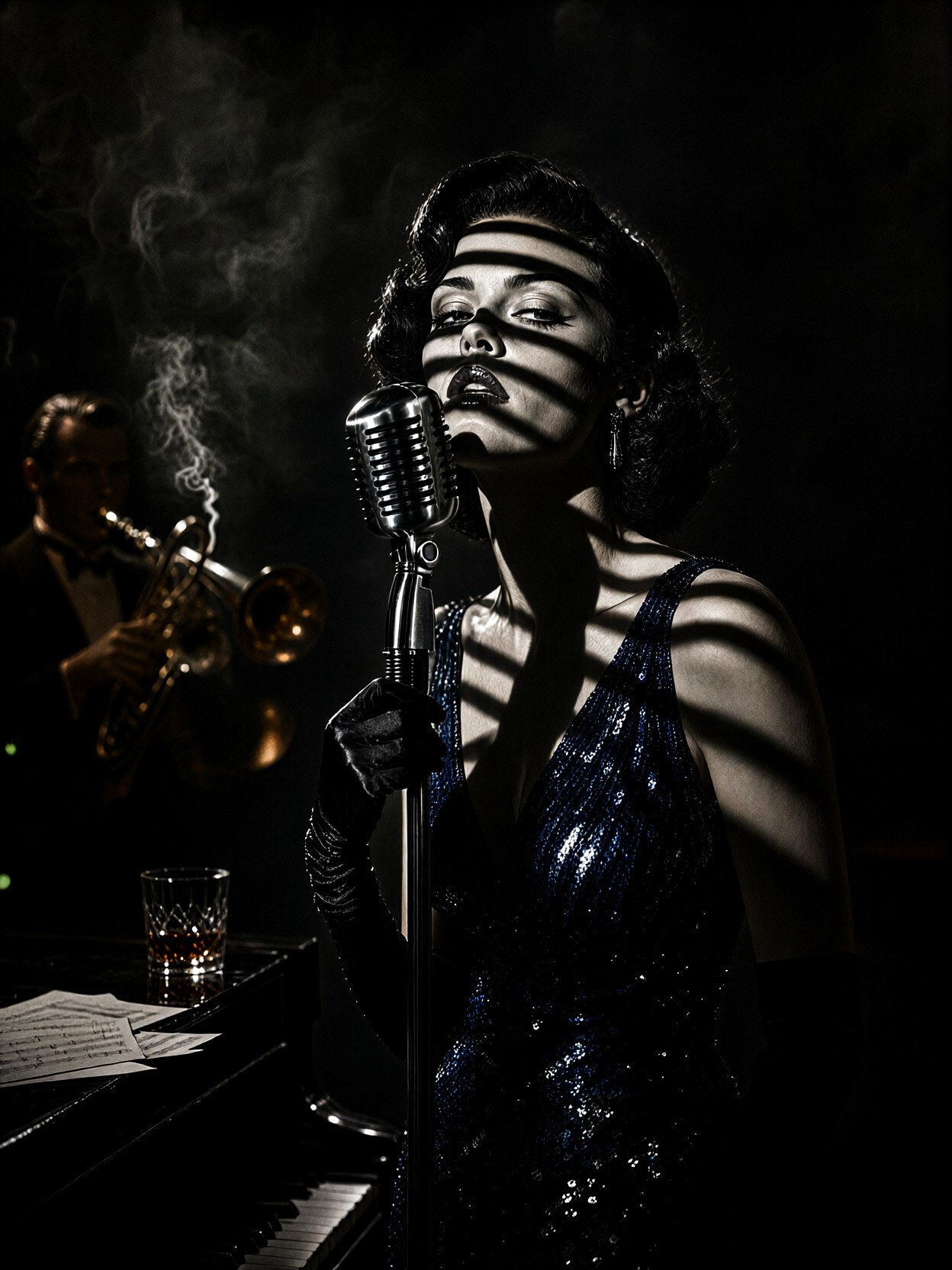
The Drama of Hard Shadows: Capturing a 1940s Midnight Performance
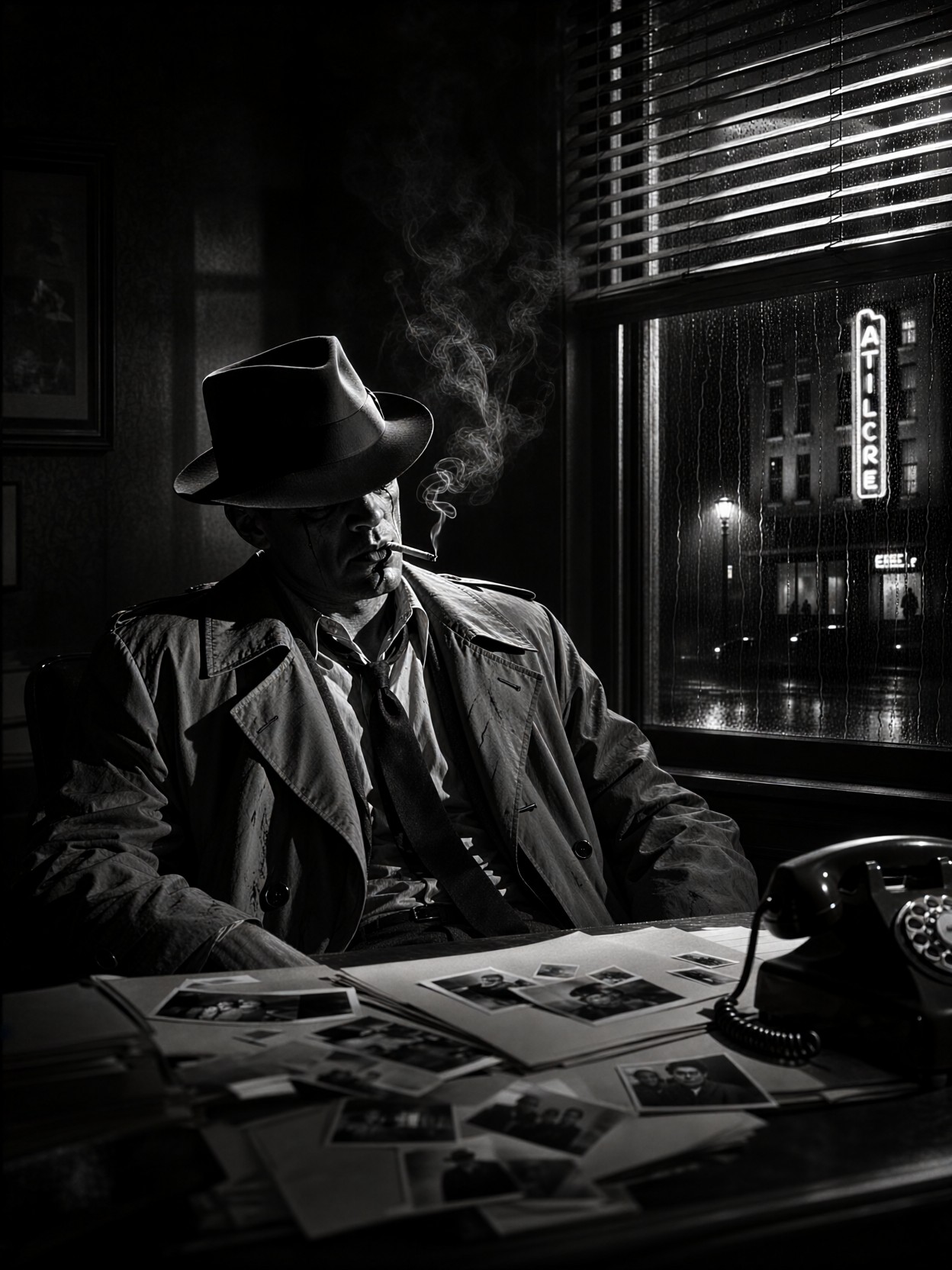
The harsh, vertical stripes of Venetian blinds cutting across a shimmering, midnight-blue gown define the entire atmosphere of this scene. This isn't just a portrait; it's a carefully orchestrated study in contrast—the juxtaposition of soft, smoky velvet and the unforgiving geometry of hard light. Qwen 2.1 excels at the precise definition of lighting and texture, allowing the model to render the wet, specular highlights of the sequined dress and the subtle, hazy glow of the brass band simultaneously.
The atmosphere is dense with narrative weight. The half-lidded eyes of the chanteuse suggest a deep, fatalistic performance, while the scattered sheet music and whiskey glass anchor the scene in a specific, transient moment of jazz history. The result is a hyper-realistic slice of cinematic melancholy, where the low-key monochrome palette ensures that every highlight, every speck of dust in the smoke, and every glint of silver feels like a precious, fleeting memory. 🥃
When to Use This Noir Aesthetic
If your project demands high-impact, mood-driven visuals, this prompt is a perfect blueprint for evocative scene generation. This style is ideal for creating striking movie posters, album cover art, dramatic character concept sheets for video games, or highly stylized editorial photography for literary features.
The composition, utilizing a 50mm lens and a low angle, is designed to grant the subject a sense of powerful, dramatic presence. We recommend using a 2:3 portrait aspect ratio to maximize the vertical impact of the Venetian blind shadows and keep the focus tight on the performer and the intimate chaos of the stage.
Settings for Qwen 2.1 — Mastering the Film Noir Look
Since Qwen 2.1 is noted for its lifelike portrait lighting and native 2K output, we can push the detail and contrast without worrying about low resolution artifacts. To maximize the dramatic depth and sharp edges characteristic of film noir, we need to guide the model strongly while maintaining the fine detail it excels at.
- Guidance Scale (cfg_scale):
7.0–9.0. Due to the highly specific nature of the lighting (Venetian blinds, smoke haze), a higher guidance scale is necessary to prevent the model from softening the hard shadow lines. - Steps: 30. While the prompt is detailed, generating a complex, multi-layered scene like this requires a high step count to ensure the smoke haze, the sequin reflections, and the background brass section all resolve coherently.
- Resolution:
1024×1792(2:3 portrait) or native 2K dimensions. The 2:3 ratio helps contain the dramatic framing of the scene.
Because Qwen 2.1 handles crisp integrated typography, you can experiment with adding specific, period-accurate text on the sheet music or a sign in the background without sacrificing visual quality.
Pushing the Emotional Tone
The atmosphere is defined by the interplay between light and shadow. If you find the scene too bleak, experiment with the light source. Adding "a single, warm spotlight" to the subject's face can create a stronger sense of vulnerability against the overwhelming darkness of the club.
Five Creative Directions to Experiment With
Five Targeted Variations for This Scene
- Change the Palette: Replace "low-key monochrome palette" with "vibrant technicolor, saturated deep crimson and sapphire" — shifts the mood from fatalistic melancholy to passionate, high-stakes drama.
- Shift the Setting: Change "1940s nightclub" to "damp, rainy alleyway, neon signs reflecting in puddles" — turns the intimate performance into a tense, street-level encounter.
- Introduce Conflict: Change "singing with half-lidded eyes" to "yelling defiance, cigarette held in teeth, expression fiercely defiant" — elevates the mood from intimate to confrontational.
- Alter the Camera Work: Add "bird's eye view, extreme wide shot, capturing the entire smoky room" — removes the intimacy and turns the scene into a sweeping, cinematic tableau.
- Change the Props: Replace "whiskey glass and scattered sheet music" with "a single, unlit cigarette dangling from her lip, empty velvet chair" — amplifies the theme of weariness and finality.
Two Prompts Ready to Generate
These examples showcase how drastically the mood changes when we shift the light source and the color temperature of the scene.
Variation: Technicolor passion — the monochrome palette is swapped for saturated, warm reds and blues, increasing the dramatic intensity of the performance.
Film Noir, A lone chanteuse in a midnight-blue sequined gown stands at a chrome microphone in a smoke-hazed 1940s nightclub, vibrant technicolor palette of deep crimson and sapphire, Venetian blind shadows cut hard black stripes across her face and bare shoulder, glistening wet-look sequins, blurred brass section glows warm amber, low-key lighting, shallow depth of field, high contrast, 8k
Variation: Urban grit — the indoor setting is replaced with a damp, rainy street scene, changing the light source from indoor haze to external neon glow.
Film Noir, A lone chanteuse in a midnight-blue sequined gown standing in a damp, rainy alleyway at midnight, neon signs reflecting in puddles, Venetian blind shadows cast by a nearby tenement, heavy rain streaking the chrome microphone, gloved hand gripping the stand, cinematic street lighting, high contrast, heavy grain, 50mm lens, ultra-detailed, 8k
More Visual Narratives in the Noir Genre
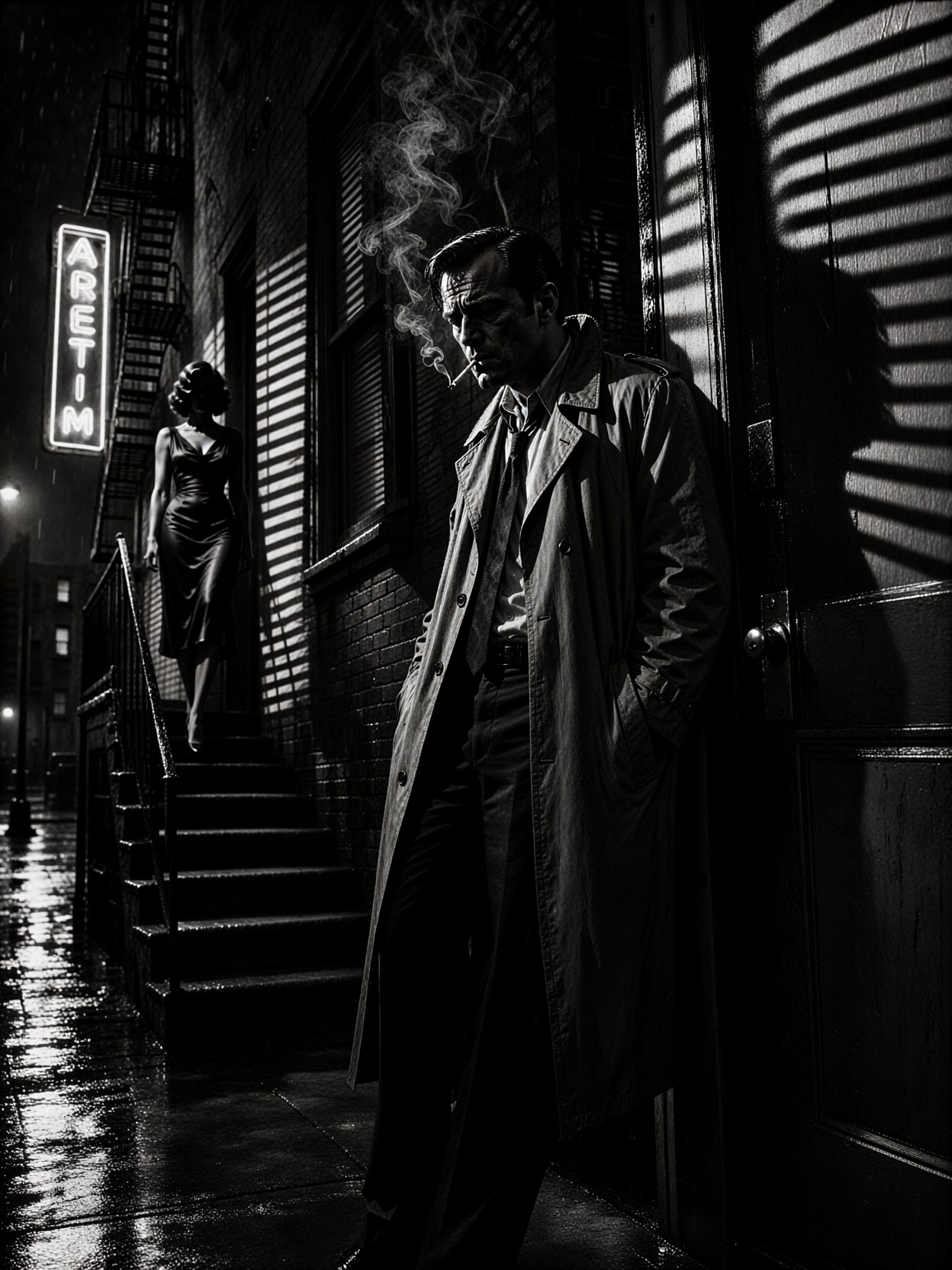
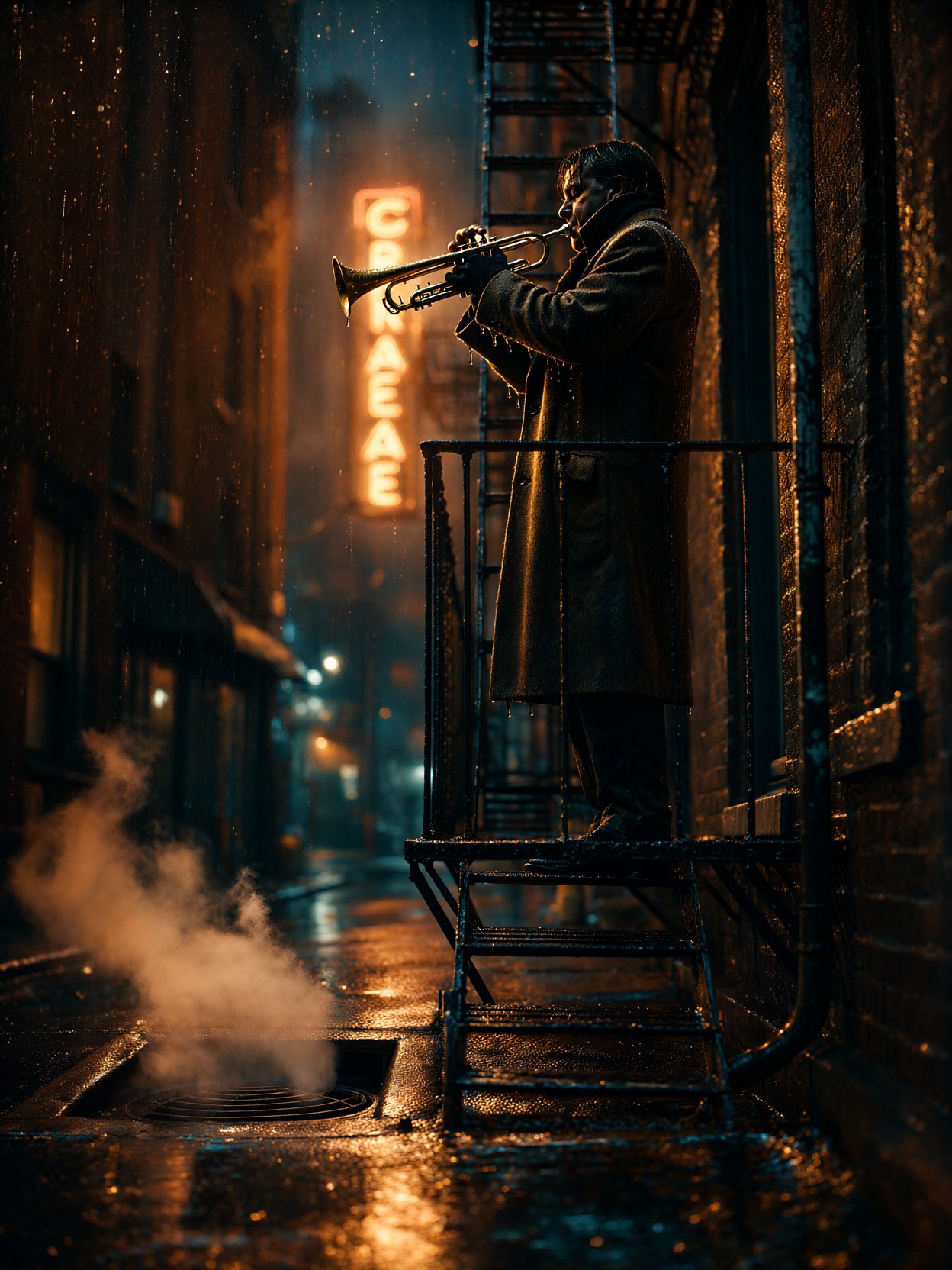
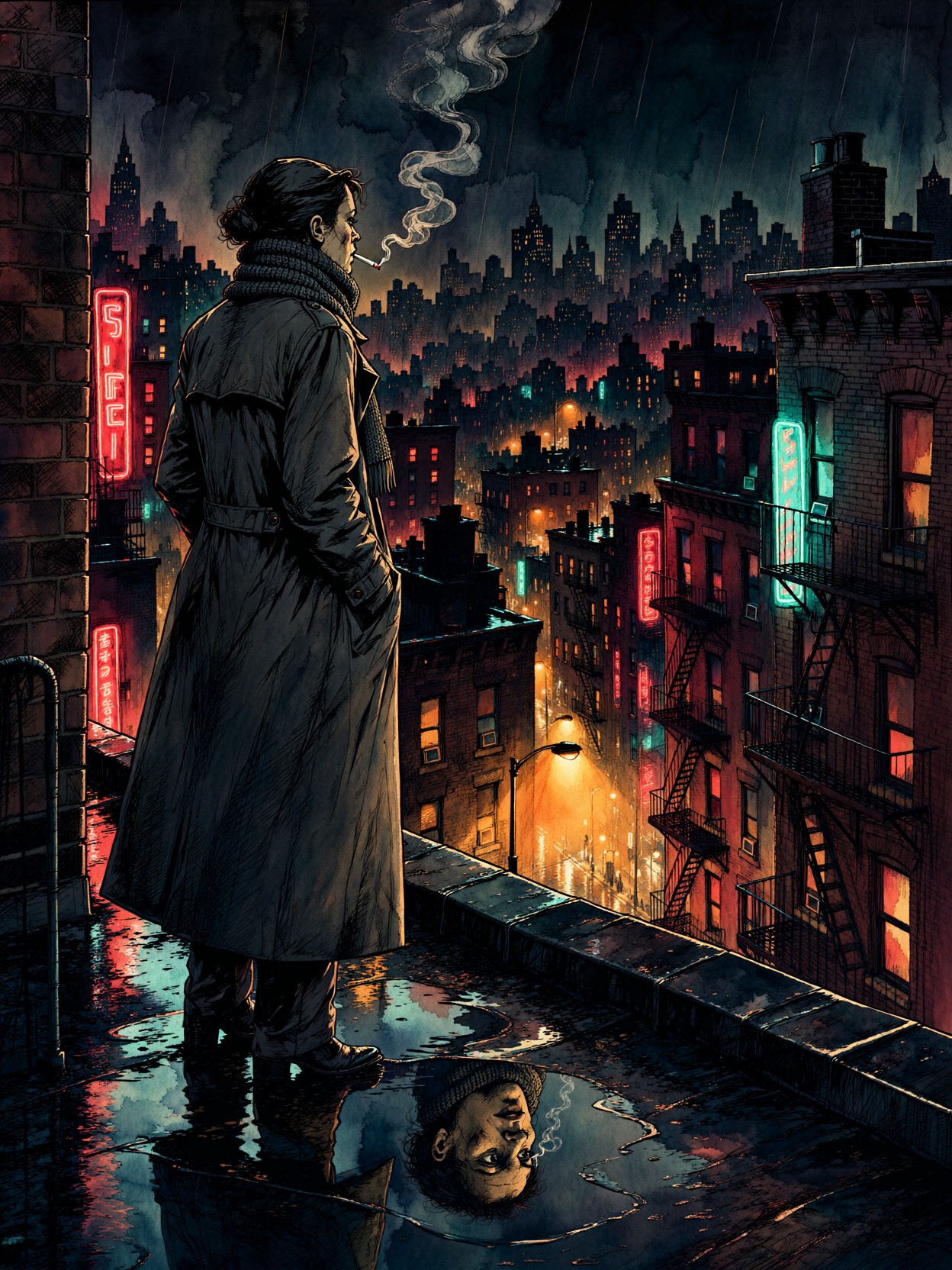
If the moody atmosphere and cinematic quality of this piece resonate with you, exploring other Noir-themed prompts can yield incredible results across different sub-genres of the era.
Explore AI Generation Tools on Proxima.art
Proxima.art is a free AI image generator powered by Flux, Qwen, HiDream, and other state-of-the-art models. Browse prompts, copy them to the generator, and create stunning AI art instantly.